The Korean Market Went Up This Week. The One You Own Went Down.
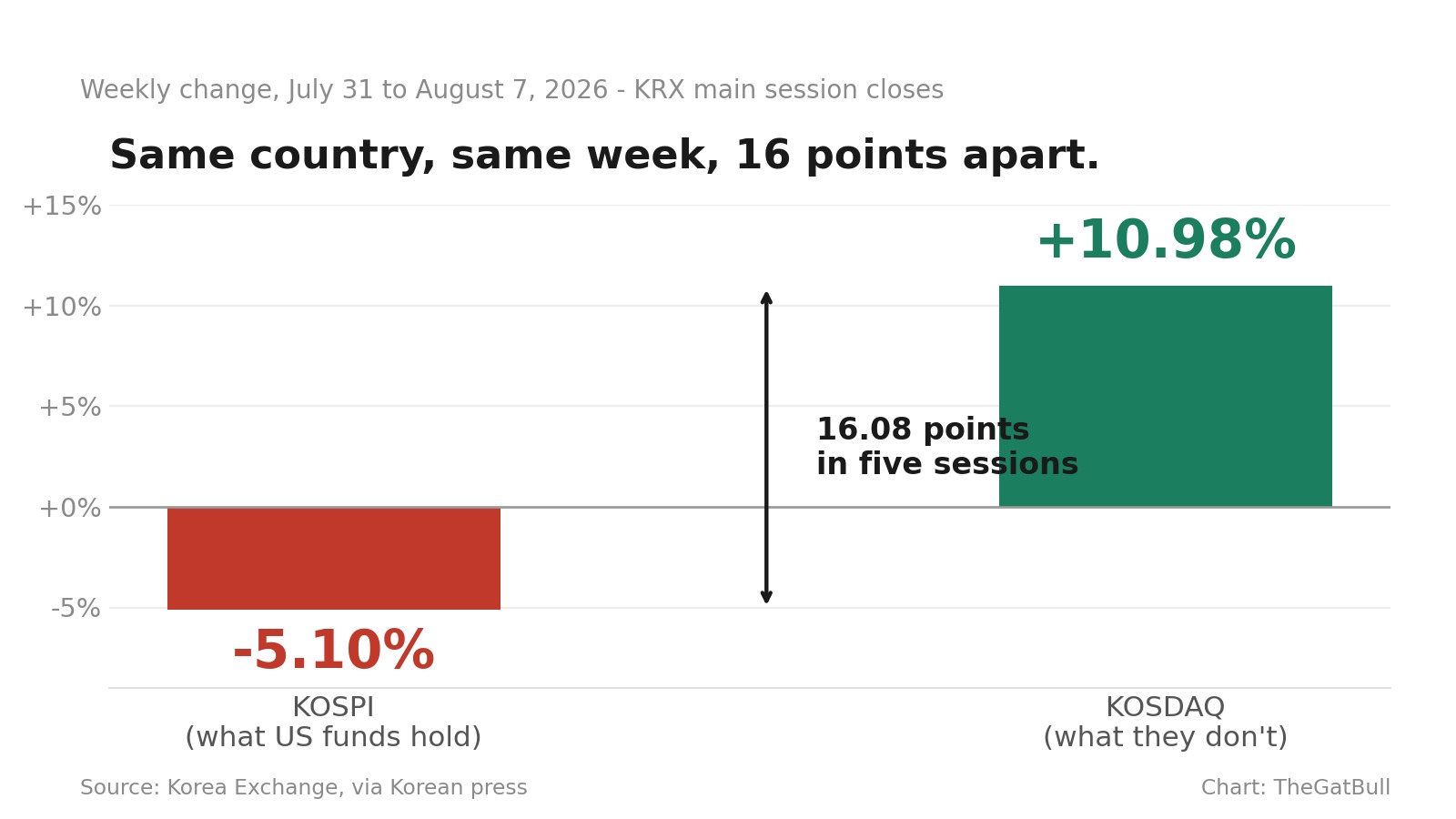
Weekly scoreboard for August 3–7, 2026. The KOSPI fell 5.10% to 6,258.77, a seventh straight weekly loss and the longest streak since December 2022.
Weekly scoreboard for August 3–7, 2026. The KOSPI fell 5.10% to 6,258.77, a seventh straight weekly loss and the longest streak since December 2022.
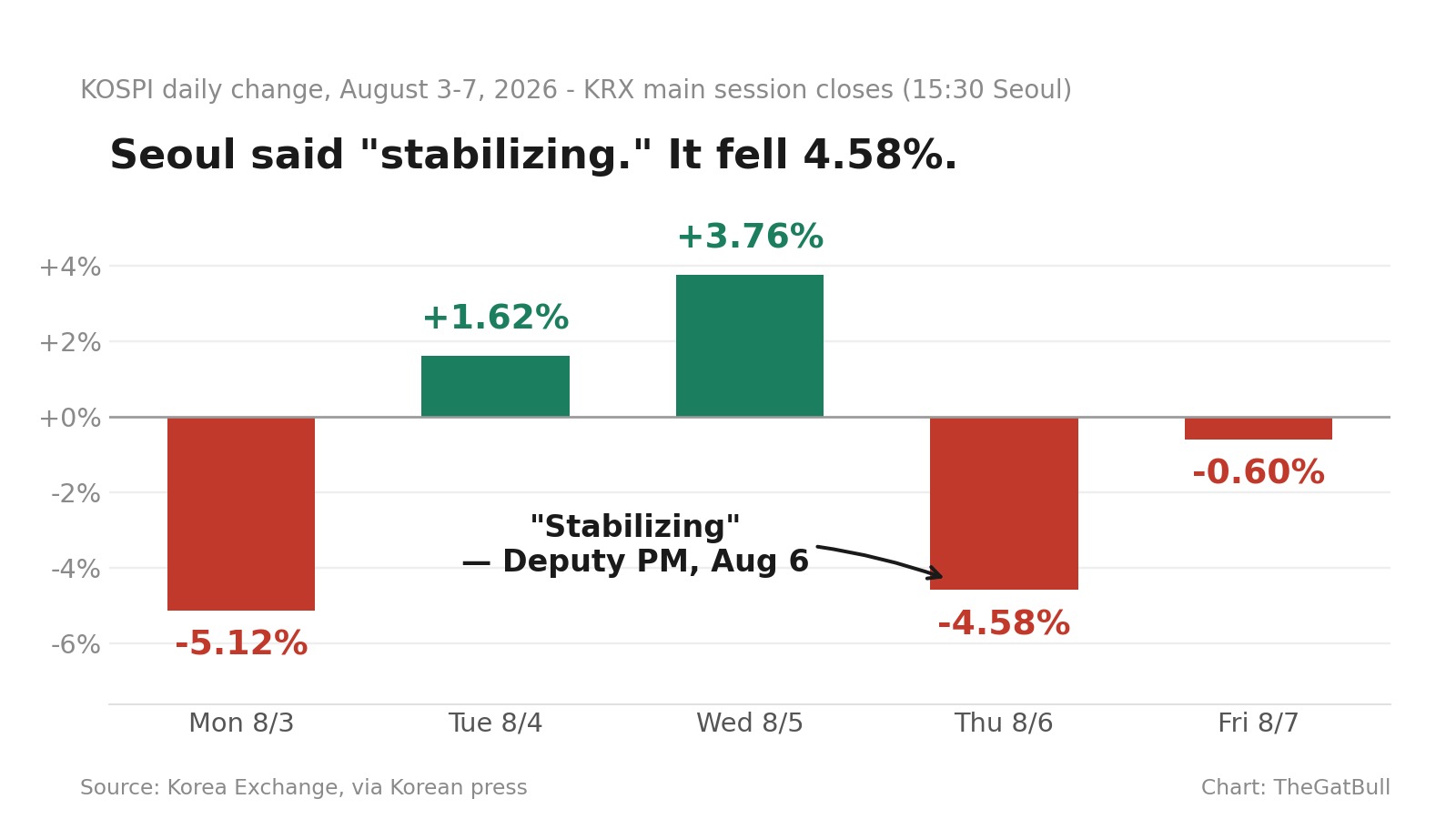
On August 6 Korea’s deputy prime minister said the index was “stabilizing.” The KOSPI closed down 4.58% that day.
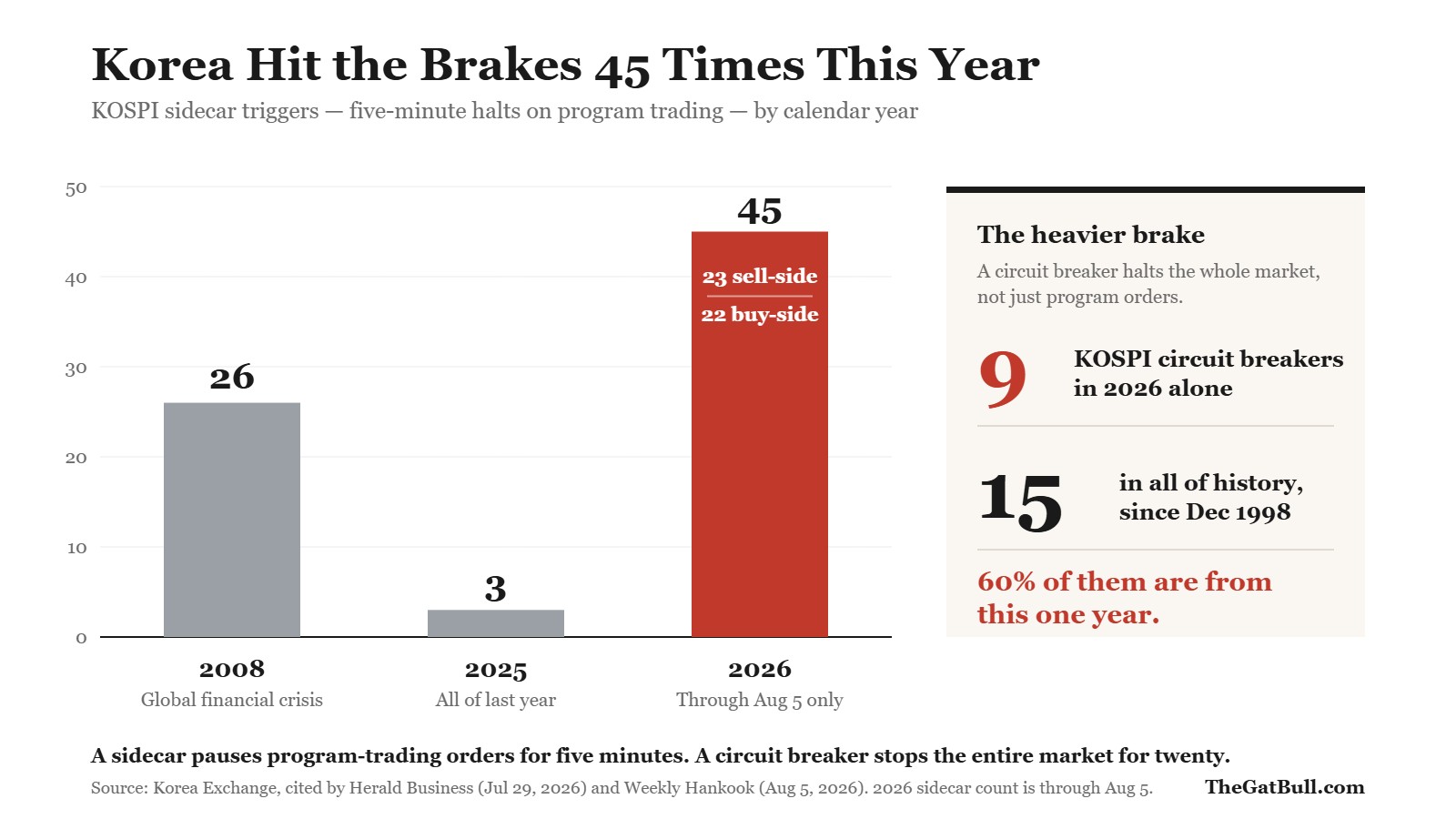
Korea stopped program trading 45 times in 2026 – 23 on the way down, 22 on the way up – against 26 in all of 2008. Nine of the 15 KOSPI circuit breakers ever recorded fired this year. A guide to Korea’s three-layer brake system: the sidecar, the circuit breaker, and the 30 percent daily price limit that has no US equivalent.
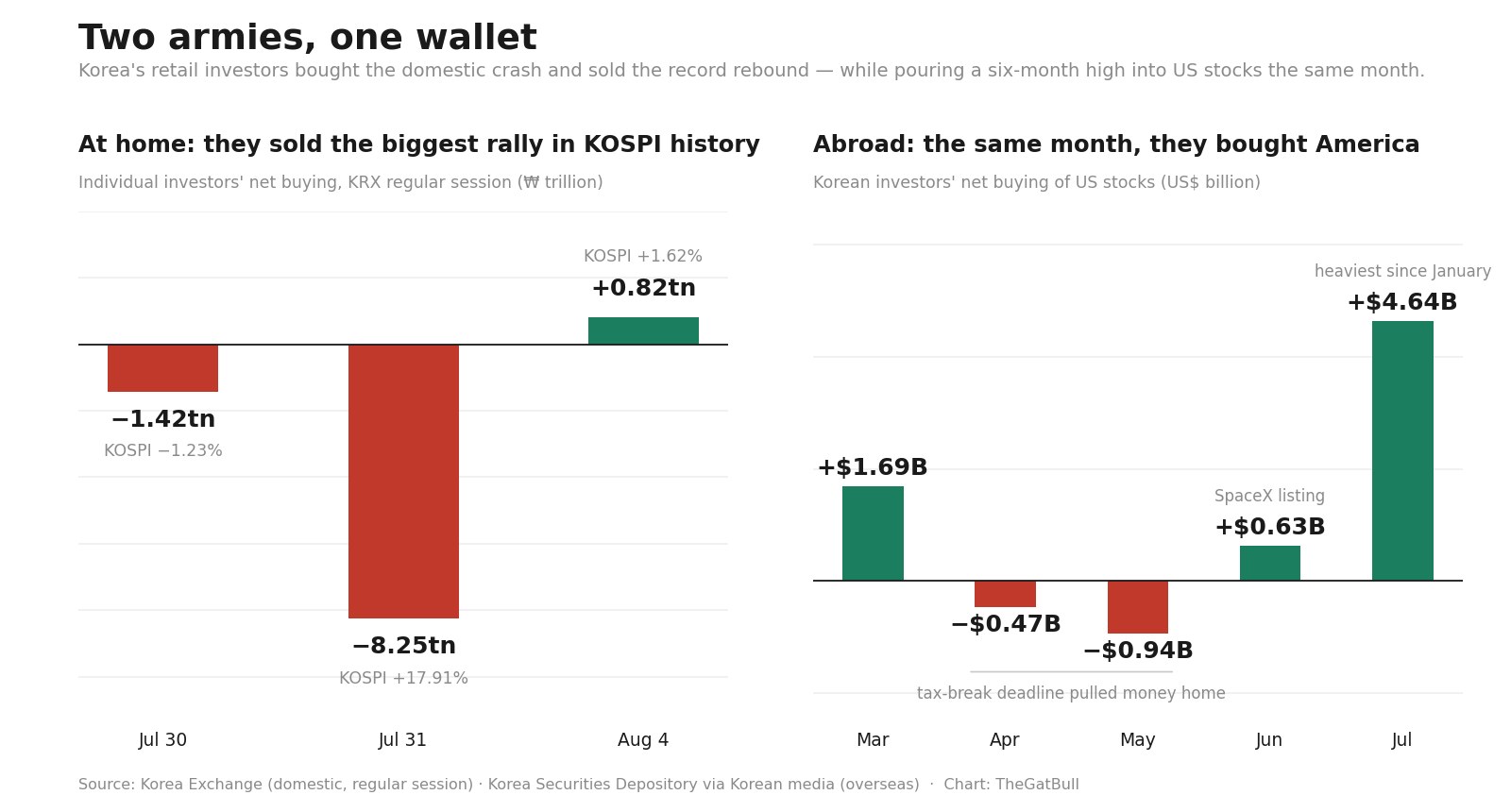
Korean retail investors have two names. Donghak ants buy Korean stocks; seohak ants buy American ones.
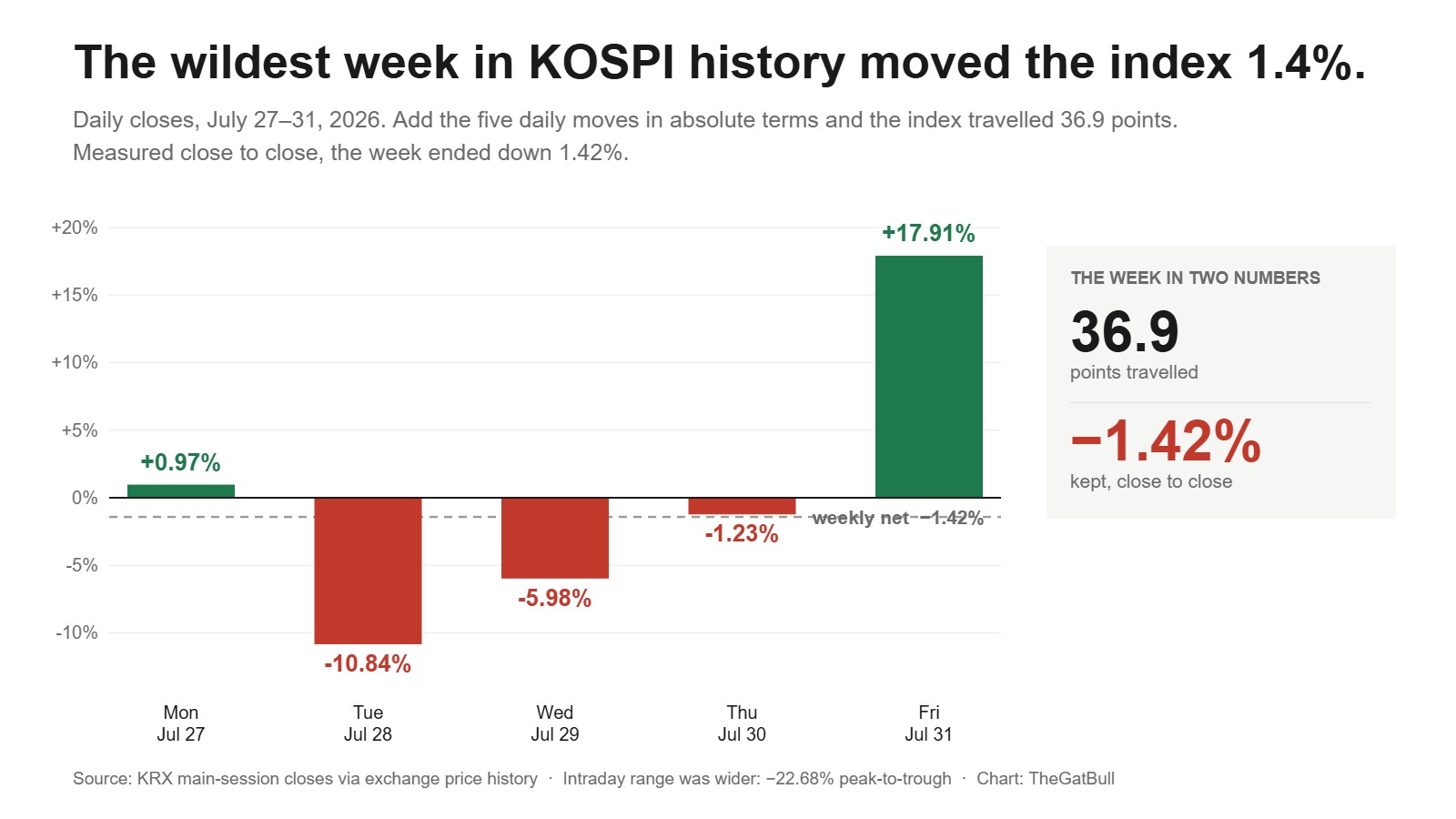
In the last week of July 2026 the KOSPI printed a −10.84% session and its largest one-day gain on record (+17.91%) inside five trading days — travelling 36.9 percentage points to finish down 1.42%. And the month headlines called the worst ever ranks third on month-end closes, behind October 1997 and October 2008.
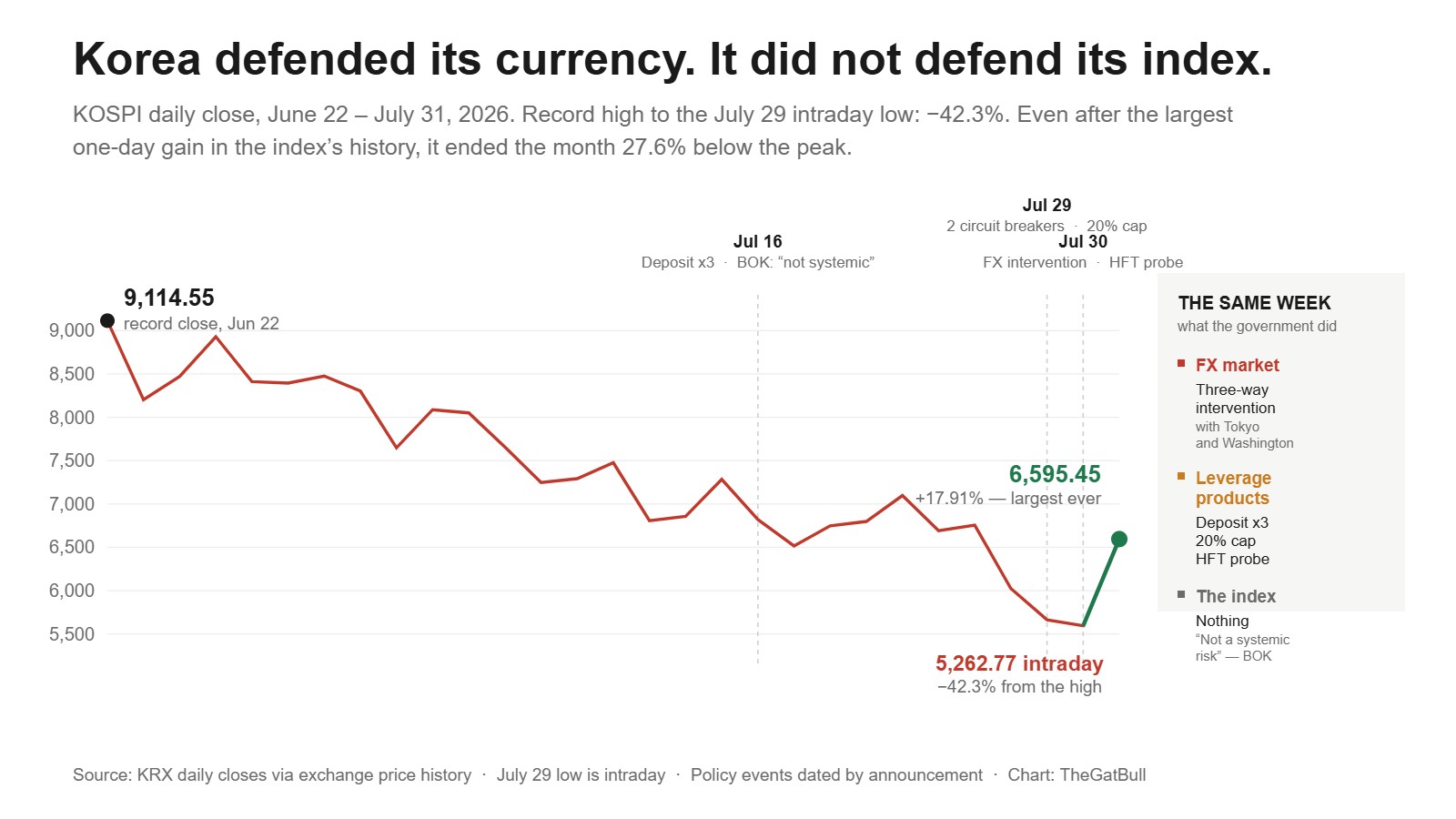
On July 30, 2026 Korea and Japan were reported to have intervened in the currency market while US authorities ran a rate check — and a Korean official confirmed the three-way coordination on the record. The same week, regulators tripled deposit requirements on leveraged ETFs and opened an investigation into foreign high-frequency trading. And while the KOSPI fell 42% from its record high, nobody bought the index.
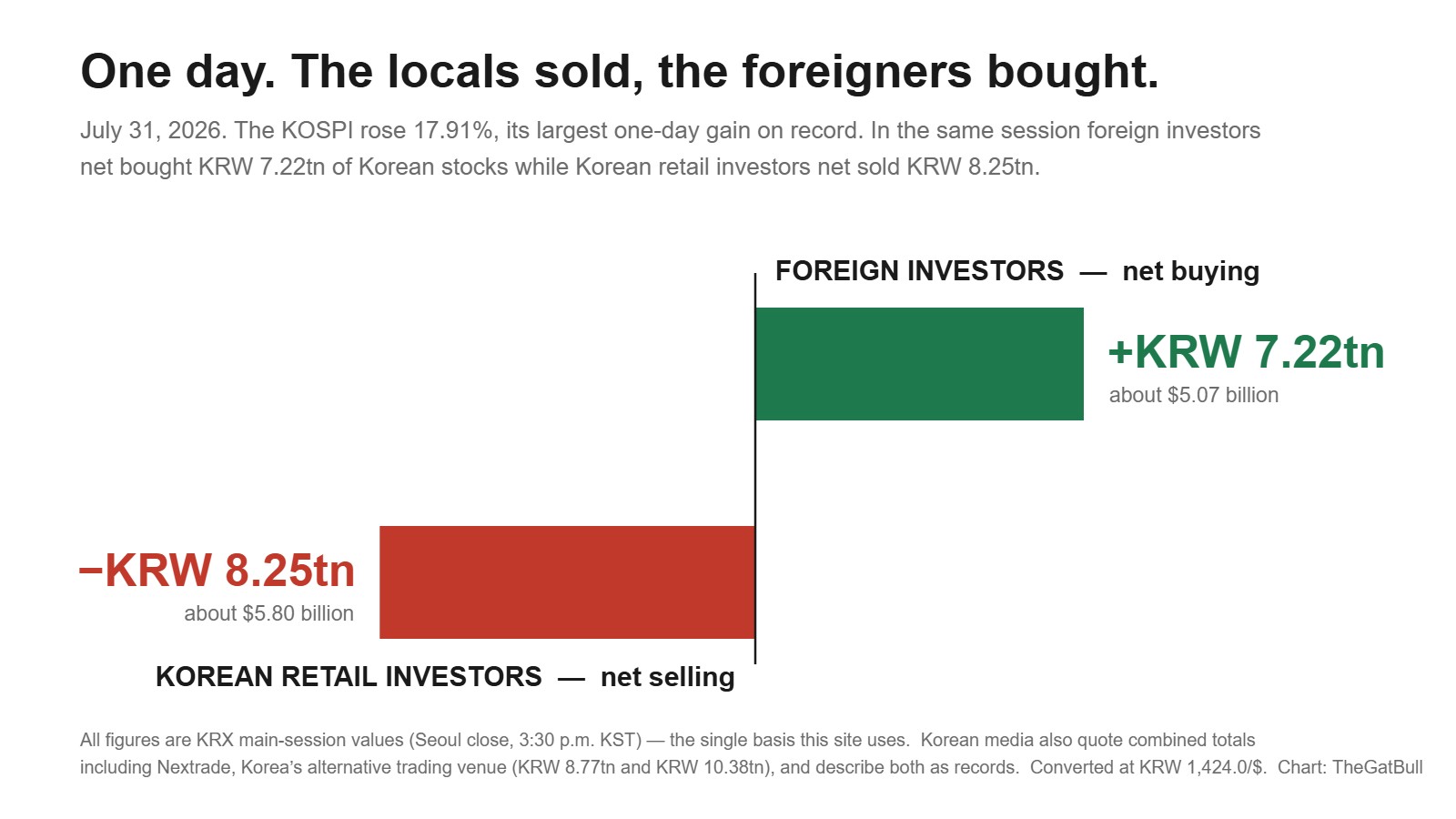
On July 31, 2026 the KOSPI rose 17.91% — its largest one-day gain ever. In the same KRX session Korean retail investors net sold ₩8.25 trillion while foreigners net bought ₩7.22 trillion. What Korean investors were writing while they sold, why SK Hynix stopped at 29.95%, and why naming the cause of this rally is a trap.
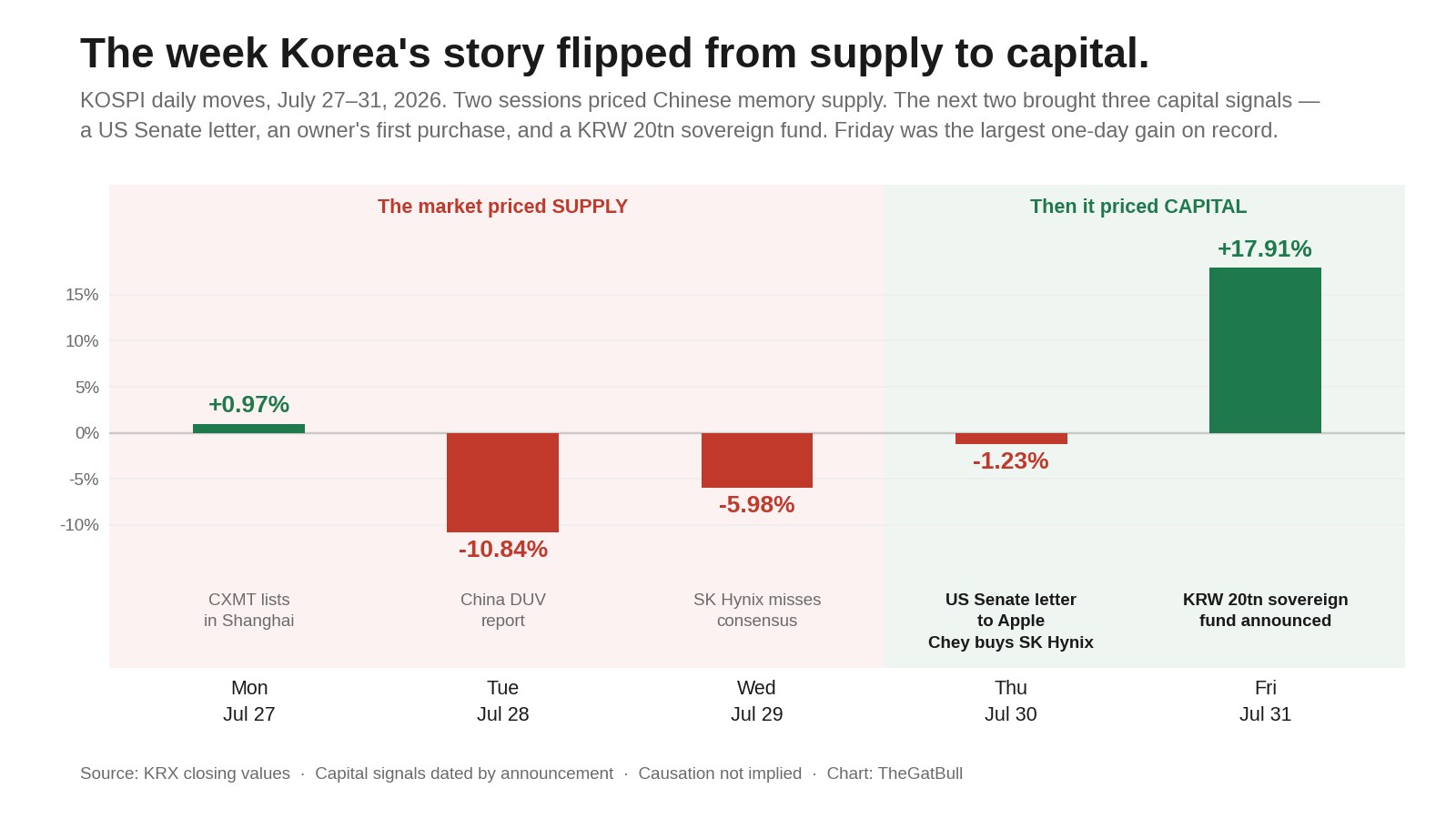
Korea will put ₩20 trillion (about $14 billion) into AI through a new Strategic Investment Account inside KIC — the first time its sovereign wealth fund has been allowed to invest at home. What actually changed, why the money is meant to attract rather than buy, and the five checkpoints that decide whether it works.
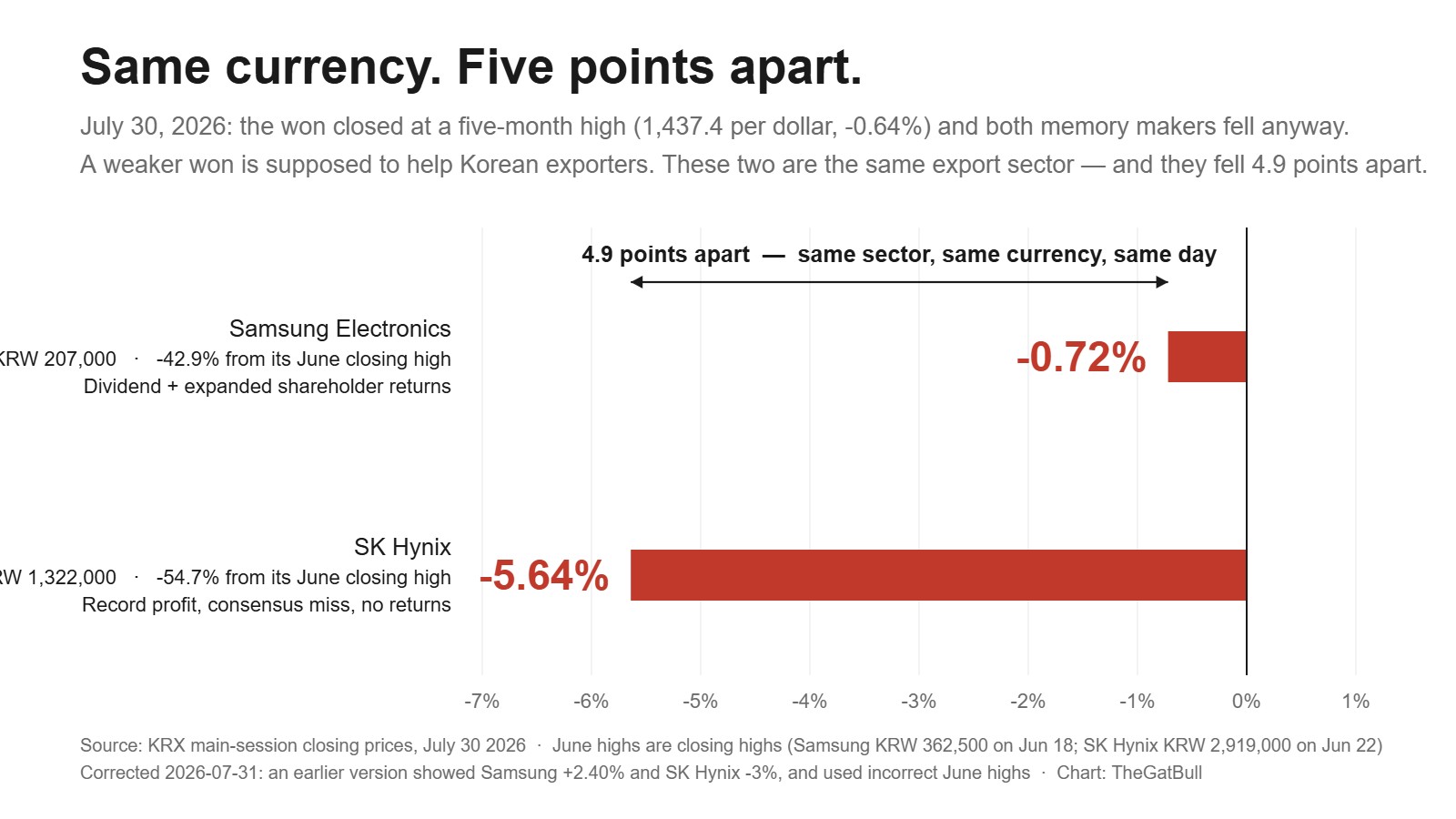
On July 30 the won closed at a five-month high while the KOSPI fell for a third day — and Samsung rose 2.4% while SK Hynix fell about 3%. Same currency, same sector, opposite directions.
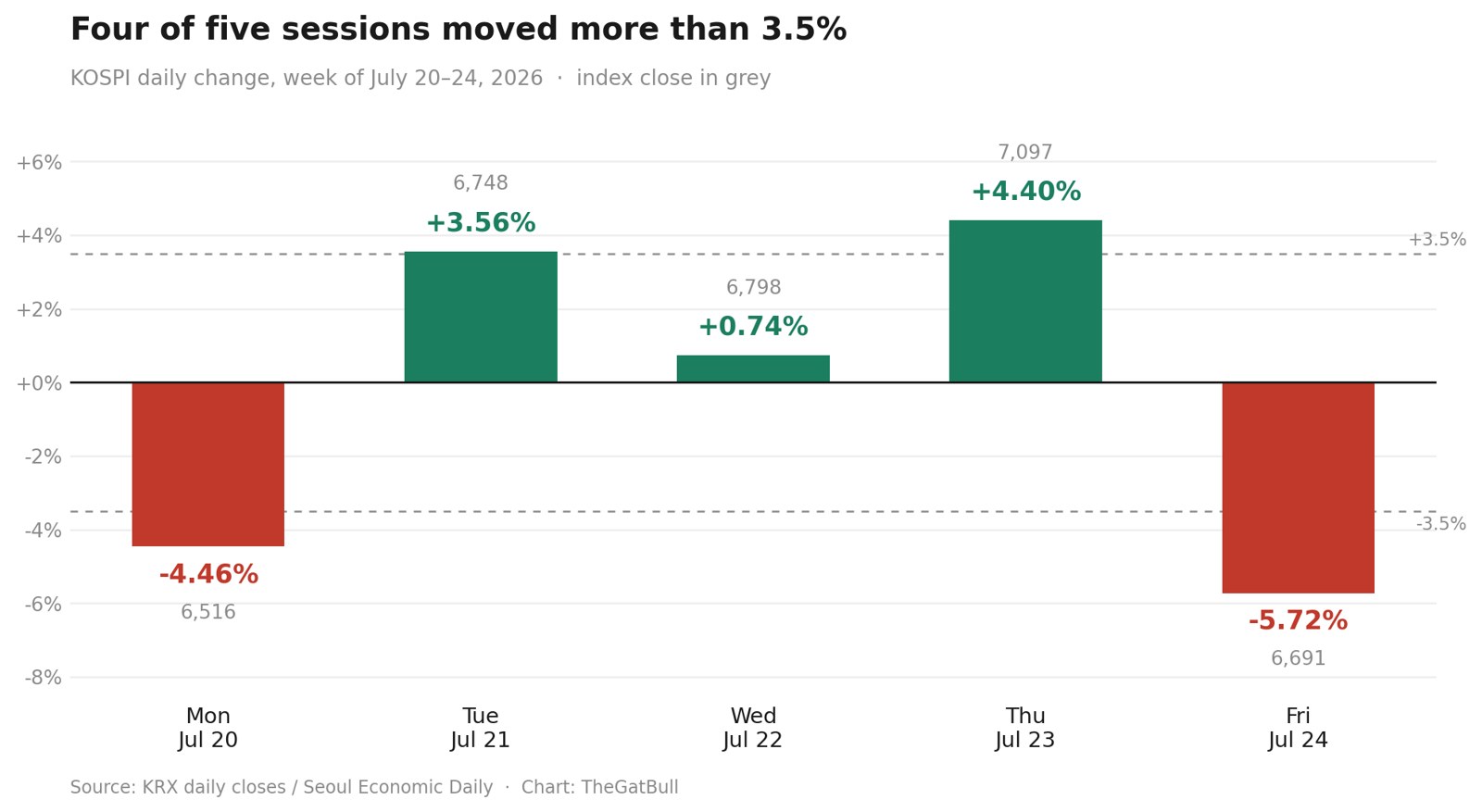
Korea’s market whipsawed all week: down 4.46% Monday, up 4.40% Thursday to reclaim 7,000 for the first time in six sessions, then down 5.72% Friday.