Korea ETF Premium Rule Doesn’t Touch Your EWY

Korea tightened how far an ETF can drift from its value and threatened to block listings. But the rule stops at the border — your US-listed EWY is outside it.
Korea tightened how far an ETF can drift from its value and threatened to block listings. But the rule stops at the border — your US-listed EWY is outside it.

The KOSPI rose 11.49% this week and Korean regulators made no public comment on it. What they published instead was the next tranche of leverage rules.
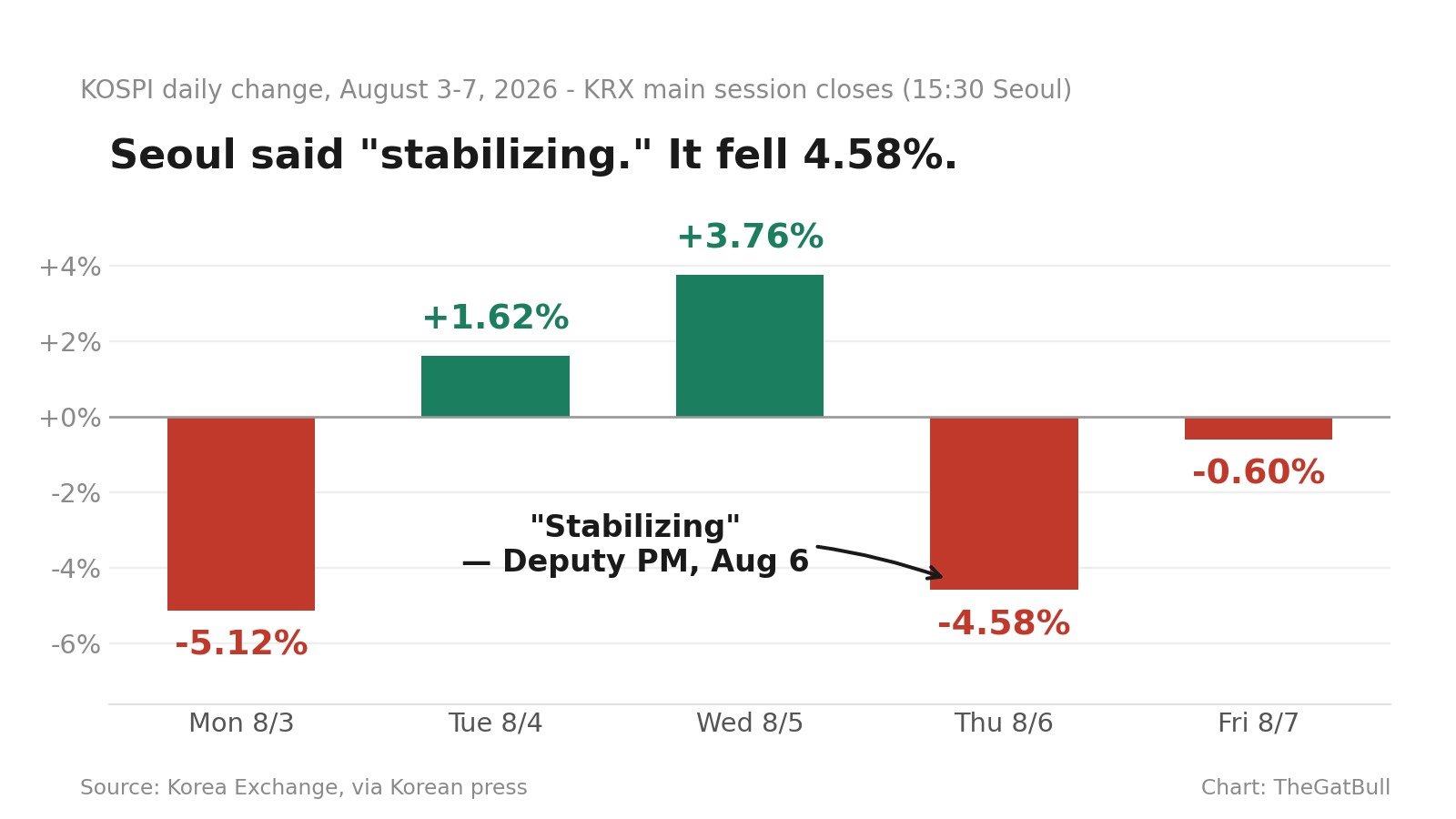
On August 6 Korea’s deputy prime minister said the index was “stabilizing.” The KOSPI closed down 4.58% that day.
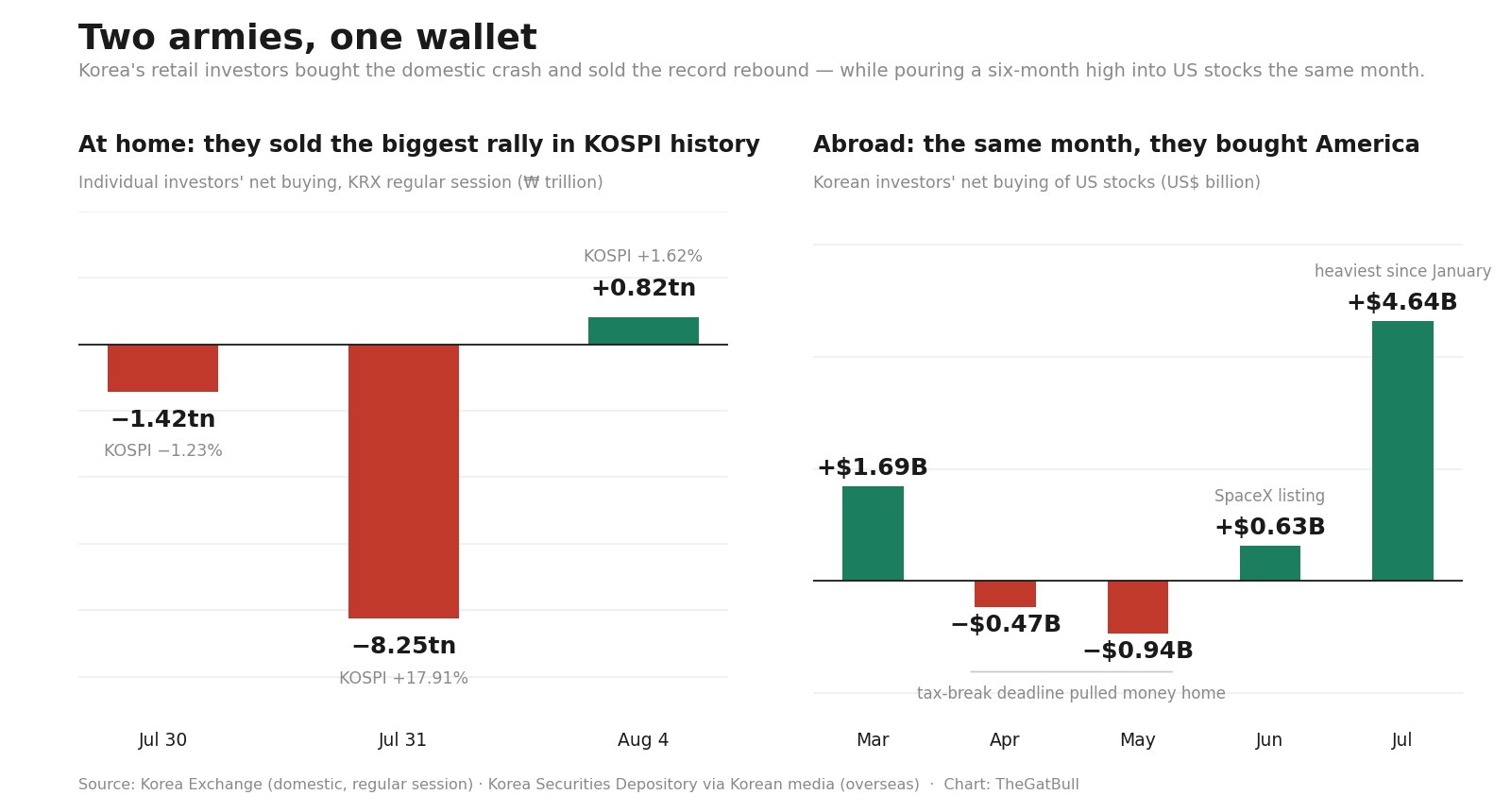
Korean retail investors have two names. Donghak ants buy Korean stocks; seohak ants buy American ones.
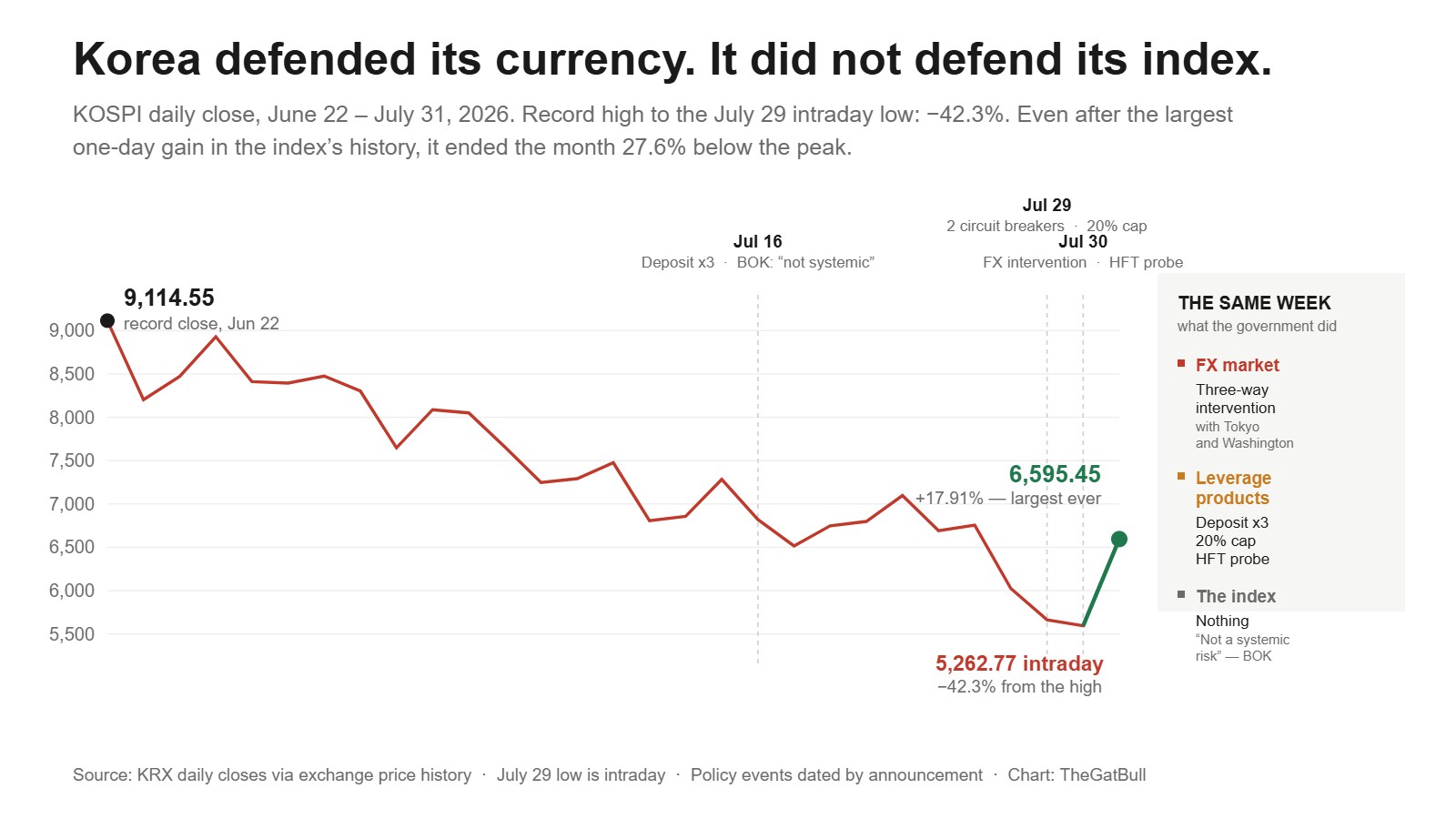
On July 30, 2026 Korea and Japan were reported to have intervened in the currency market while US authorities ran a rate check — and a Korean official confirmed the three-way coordination on the record. The same week, regulators tripled deposit requirements on leveraged ETFs and opened an investigation into foreign high-frequency trading. And while the KOSPI fell 42% from its record high, nobody bought the index.
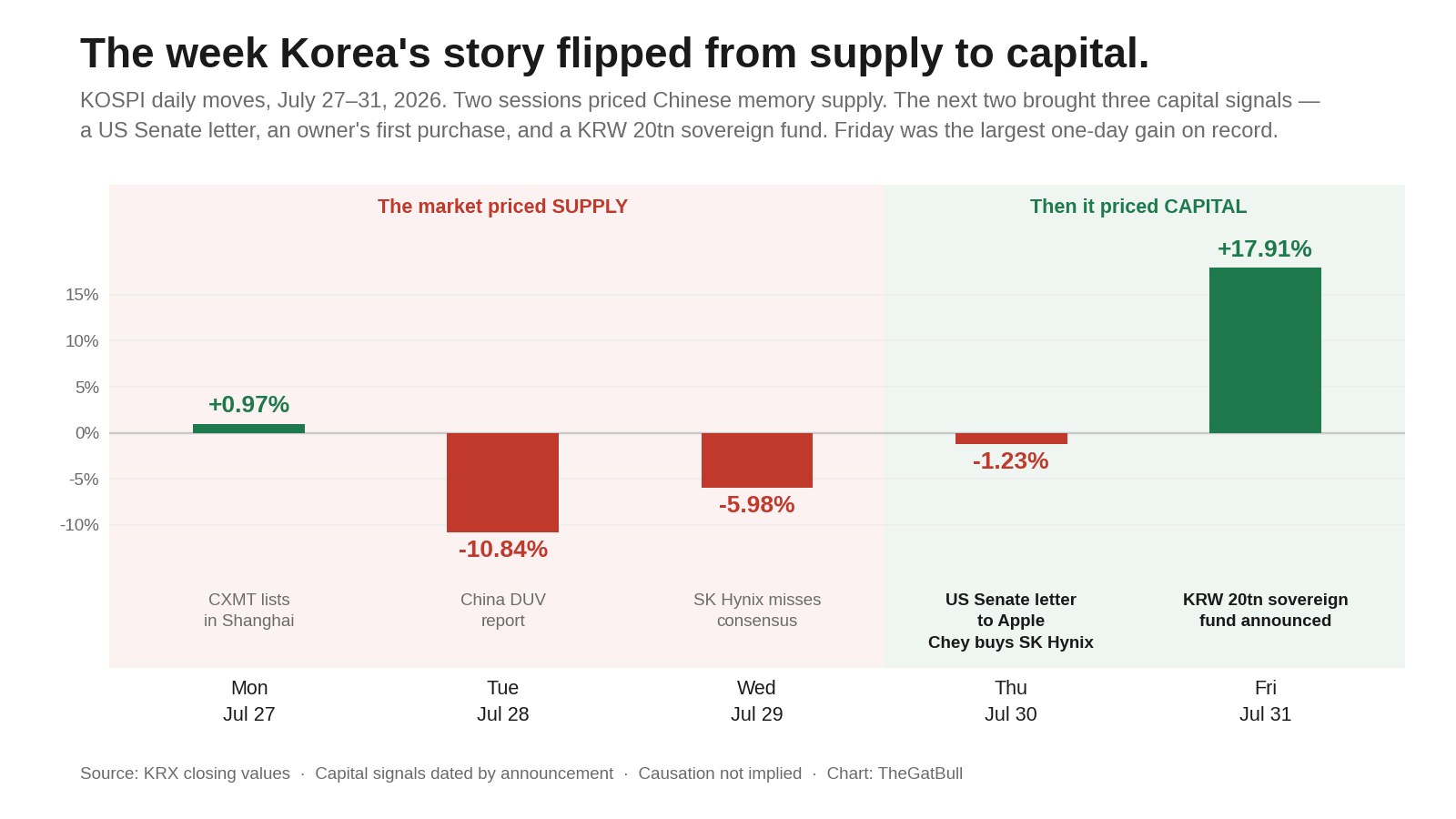
Korea will put ₩20 trillion (about $14 billion) into AI through a new Strategic Investment Account inside KIC — the first time its sovereign wealth fund has been allowed to invest at home. What actually changed, why the money is meant to attract rather than buy, and the five checkpoints that decide whether it works.
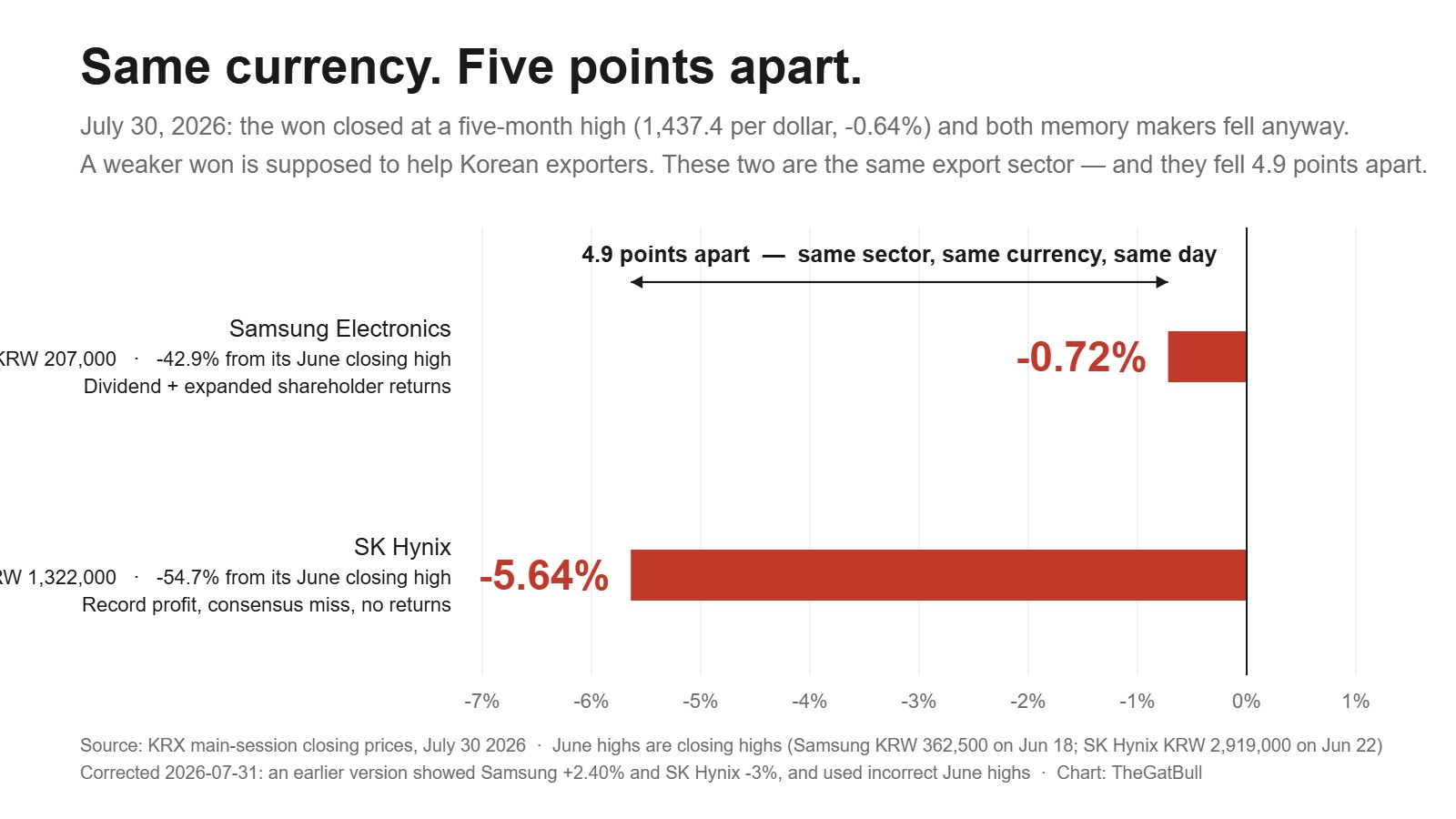
On July 30 the won closed at a five-month high while the KOSPI fell for a third day — and Samsung rose 2.4% while SK Hynix fell about 3%. Same currency, same sector, opposite directions.
Only about a dozen Korean companies trade as US ADRs — so most of Korea looks unbuyable from a US account. It isn’t.
For years a Korean buyback was only half a buyback — companies could resell the treasury shares later.
GE Vernova trades at 63x and Vertiv at 52x+ — while Korea’s transformer trio sits 40% off its highs with a record ₩32.35T (~$21.5B) order backlog.