Which Korean AI Stocks Fell Most After the Midterms? Power.
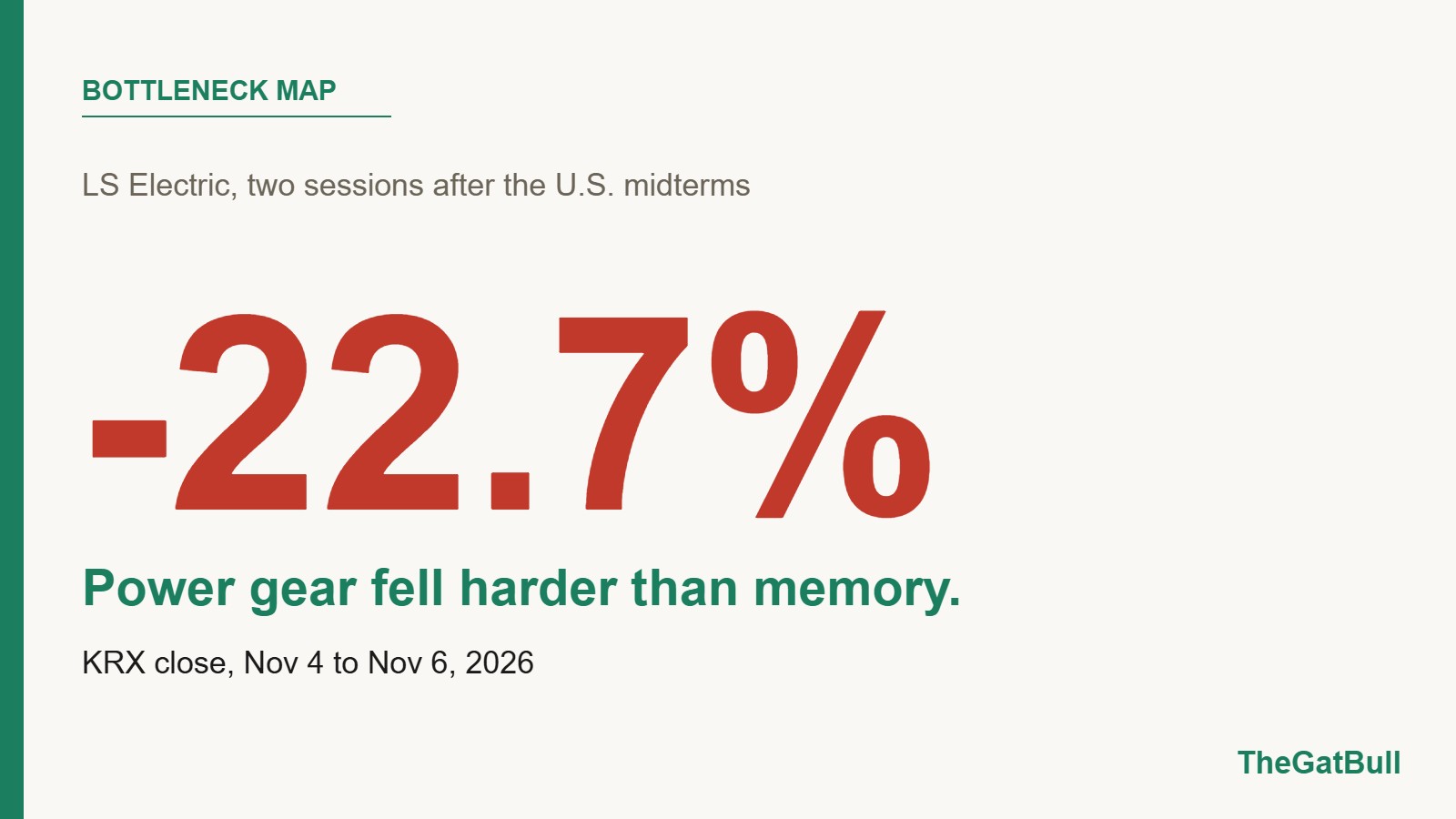
Two days after the U.S. midterms, Korea’s power-equipment makers fell harder than SK Hynix. Their filings show which ones named U.S. data centers.
Two days after the U.S. midterms, Korea’s power-equipment makers fell harder than SK Hynix. Their filings show which ones named U.S. data centers.
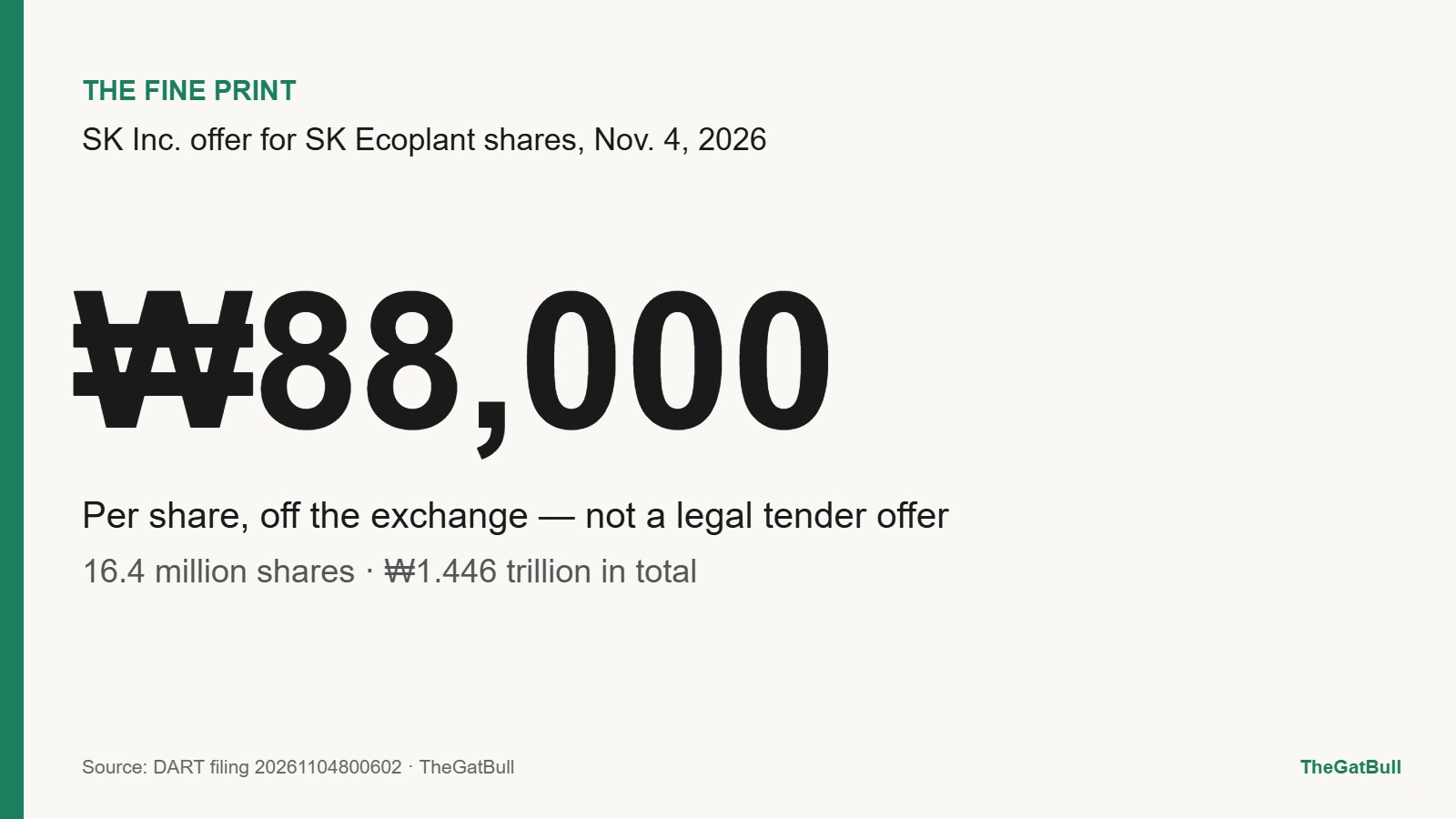
SK Inc. will pay ₩88,000 a share for the rest of unlisted SK Ecoplant. Headlines said tender offer; the filing says Korea’s tender-offer law does not apply.
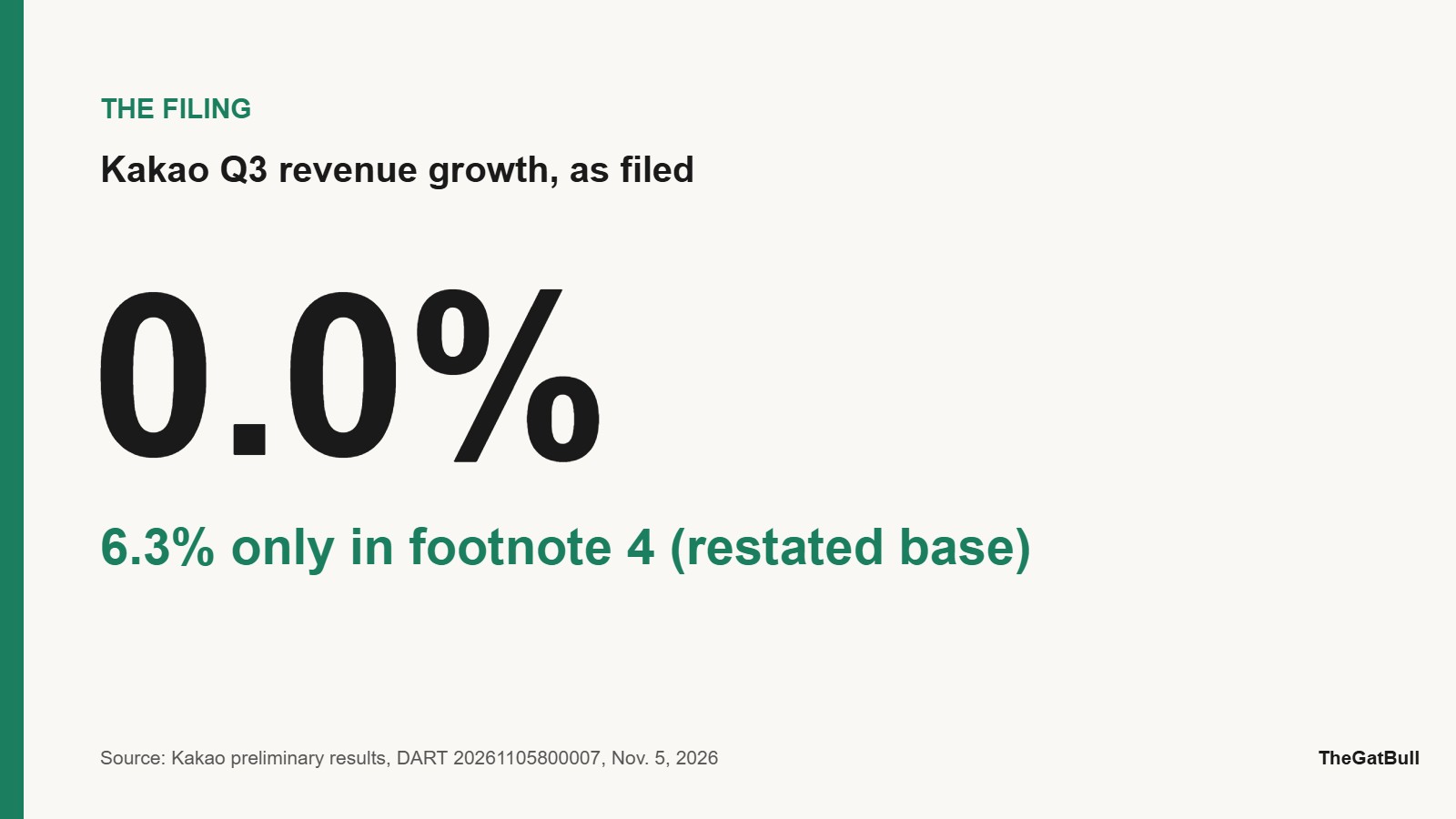
Kakao’s Q3 filing shows revenue flat from a year earlier; the 6.3% growth comes from a restated base in footnote 4. Plus the buyback and spin-off delay.
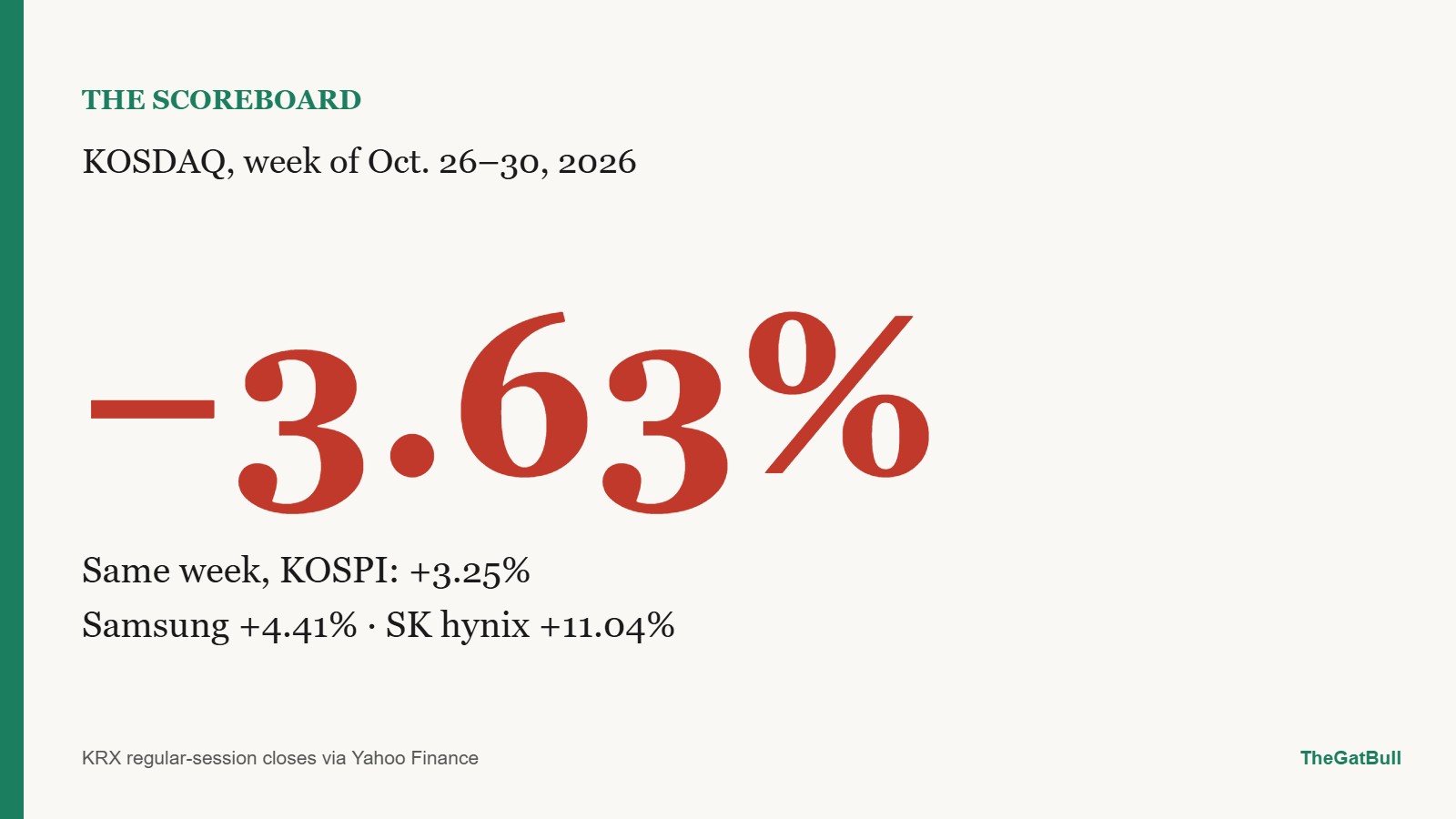
Over Oct. 26–30, KOSPI rose 3.25% and KOSDAQ fell 3.63% as Samsung (+4.41%) and SK hynix (+11.04%) reported. KOSPI regained 6,000, then gave it back.
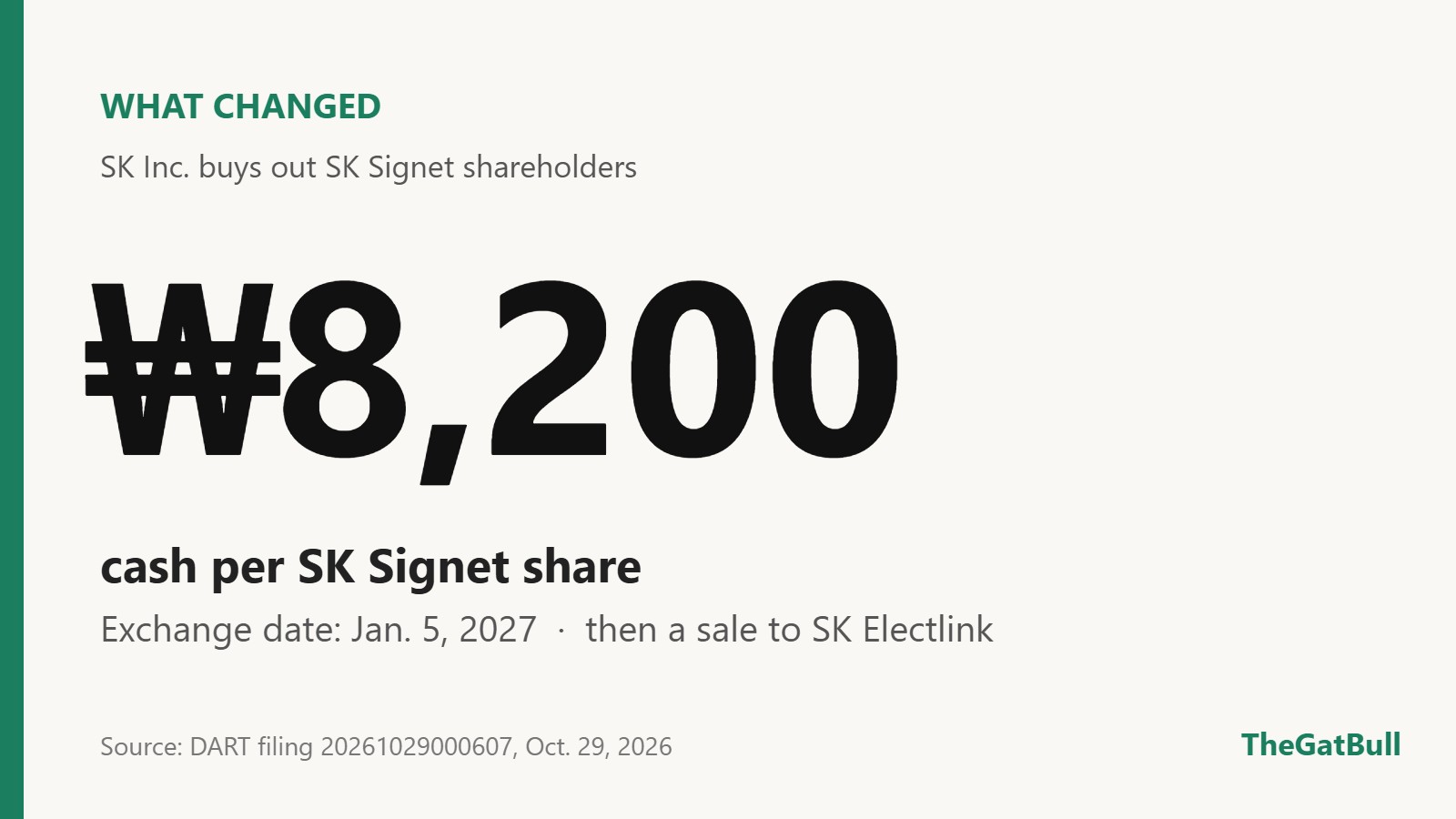
SK Inc. will pay KRW 8,200 a share to take SK Signet private on Jan. 5, 2027, then sell it to SK Electlink in Q1. Dates and numbers come from the filing.
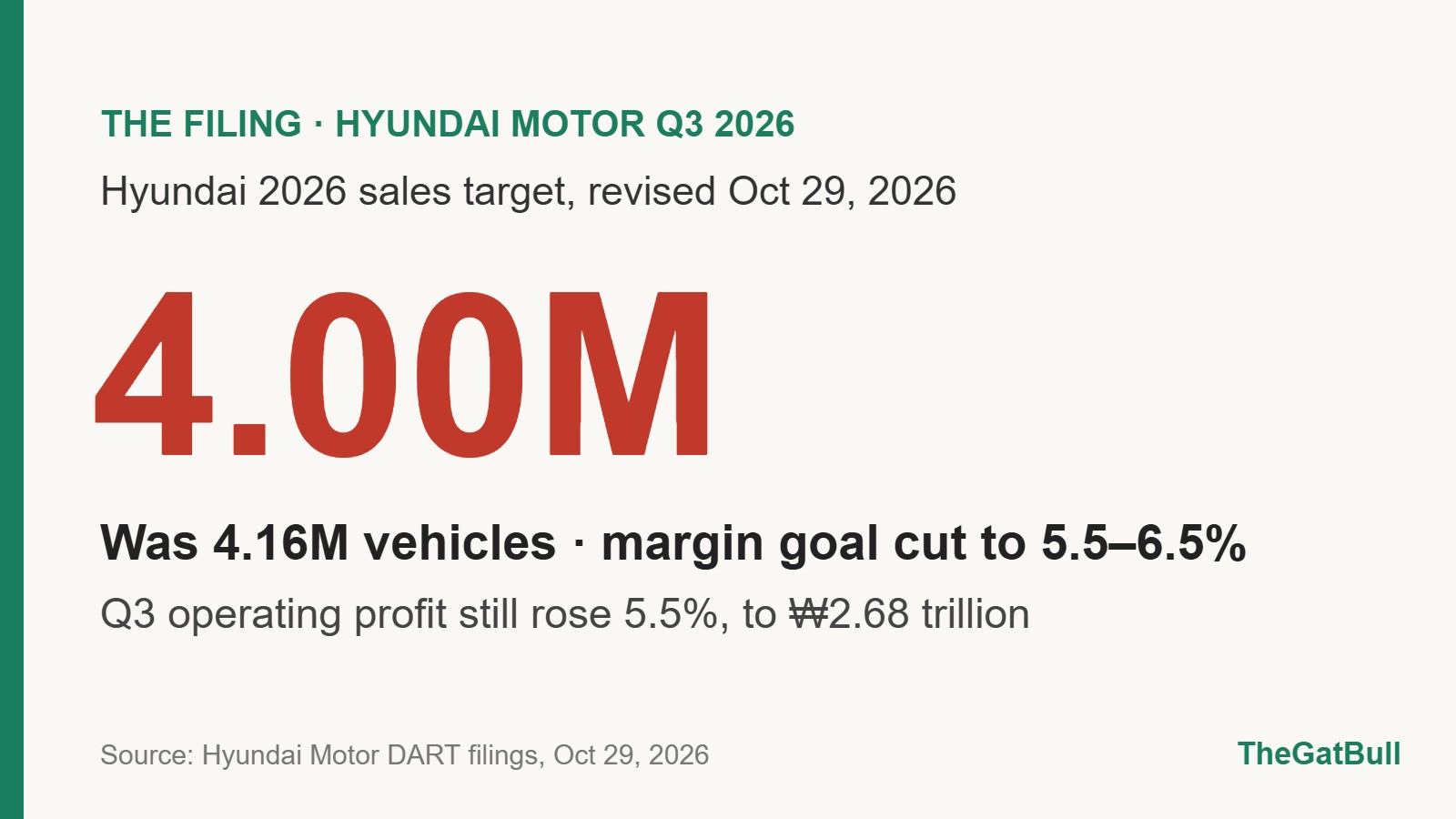
Hyundai’s Q3 operating profit rose 5.5% as a weaker won reportedly offset an 11% sales drop, and it cut its 2026 targets the same day. What to watch next.
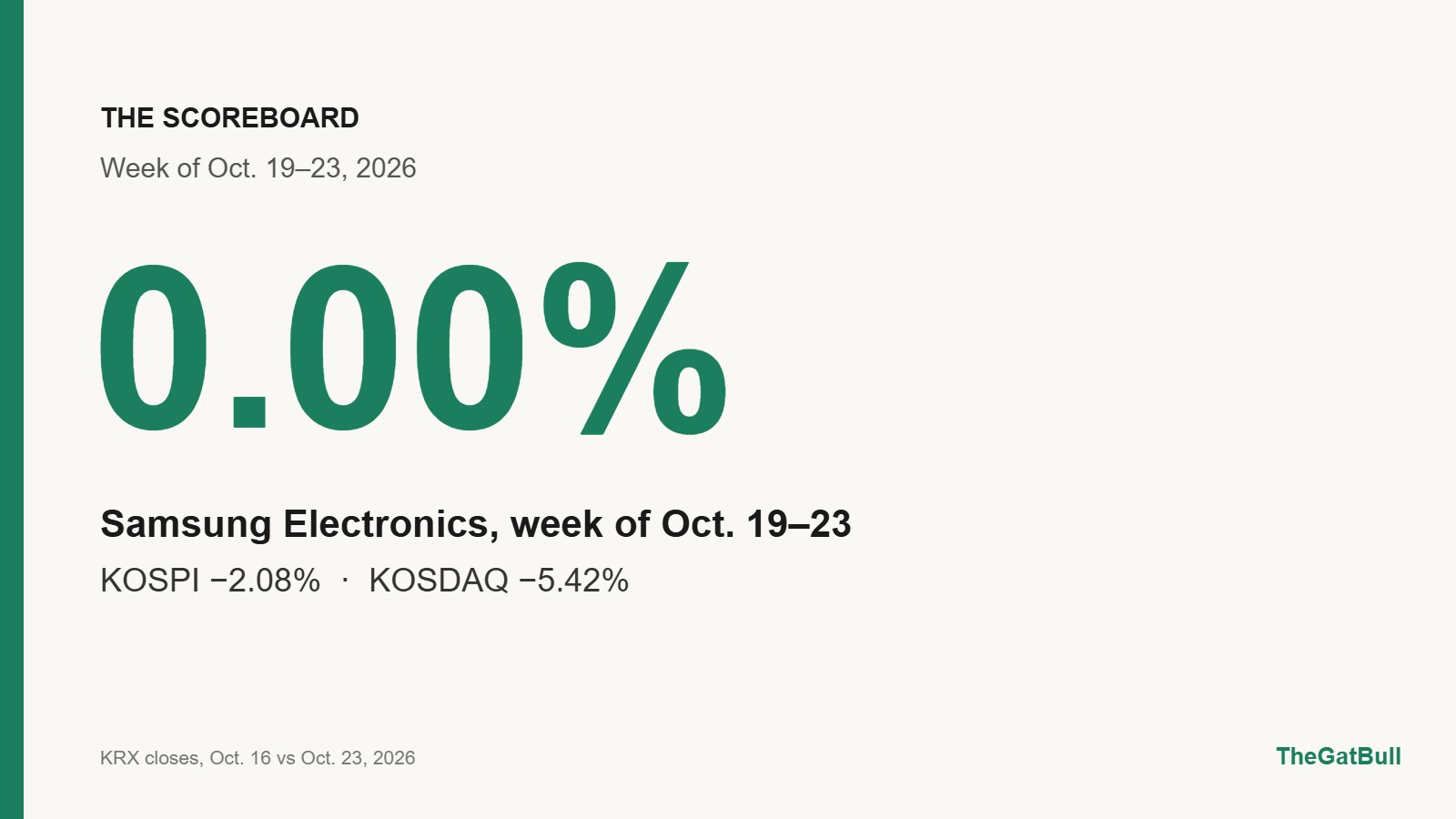
KOSPI changed direction every session Oct. 19–23 and fell 2.08% for the week, while Samsung ended flat and SK hynix rose 0.39%. KOSDAQ lost 5.42%.
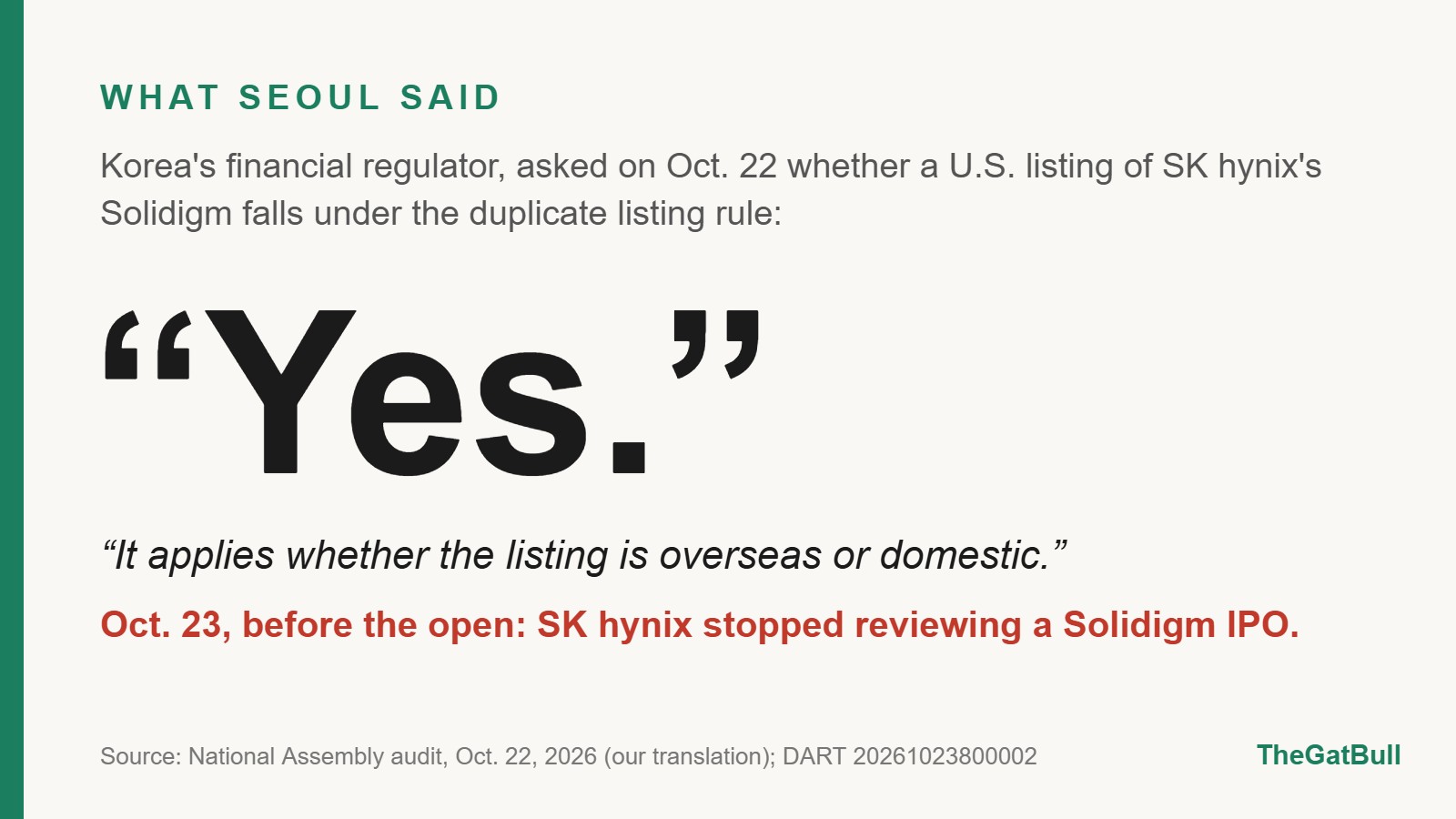
Seoul’s top financial regulator said Oct. 22 its duplicate listing rule covers U.S. IPOs. The next morning, SK hynix stopped reviewing a Solidigm IPO.
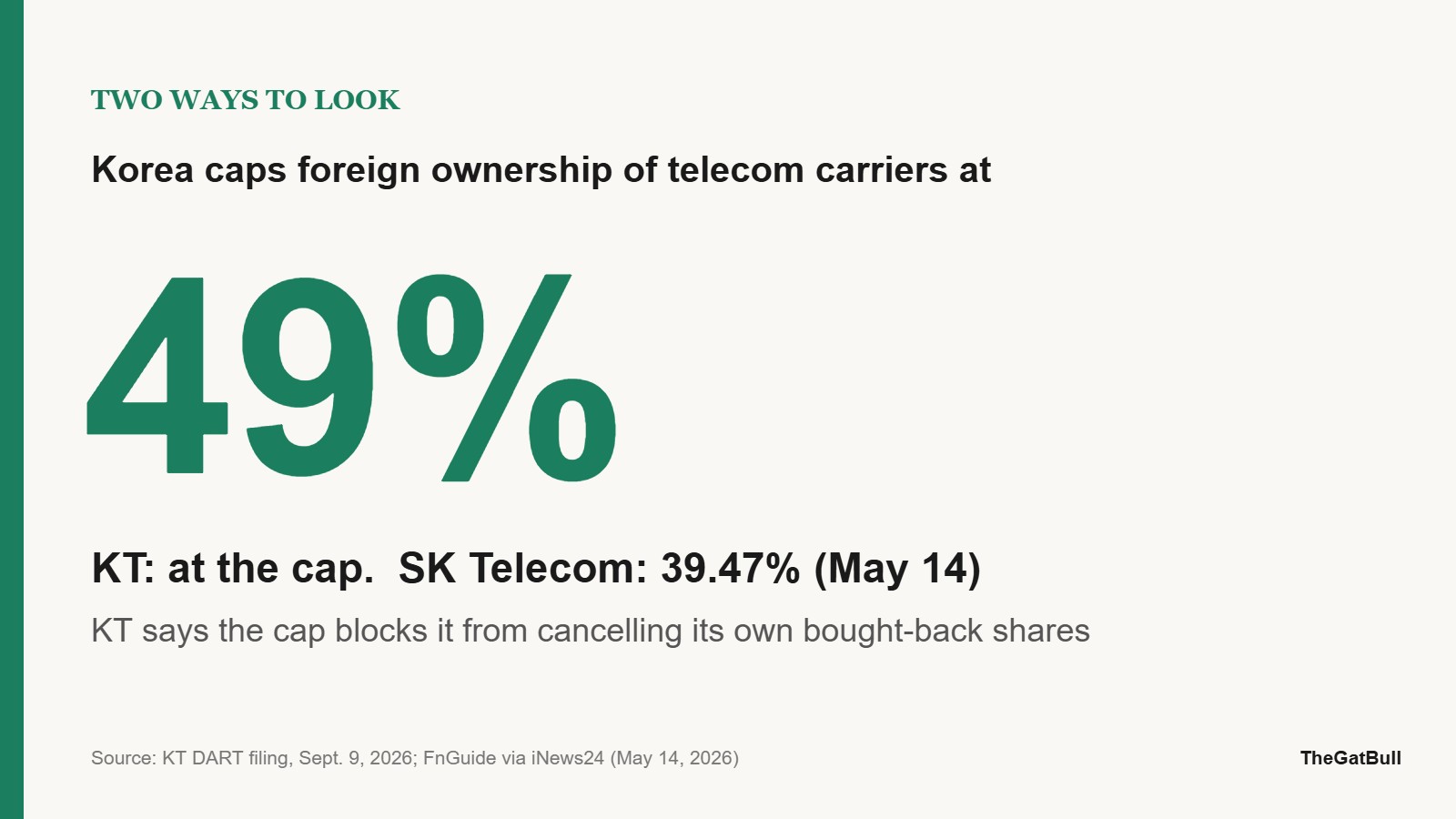
SK Telecom and KT both pay quarterly dividends, but KT has hit Korea’s 49% foreign ownership cap. What that means for SKM and KT ADR holders, and next dates.
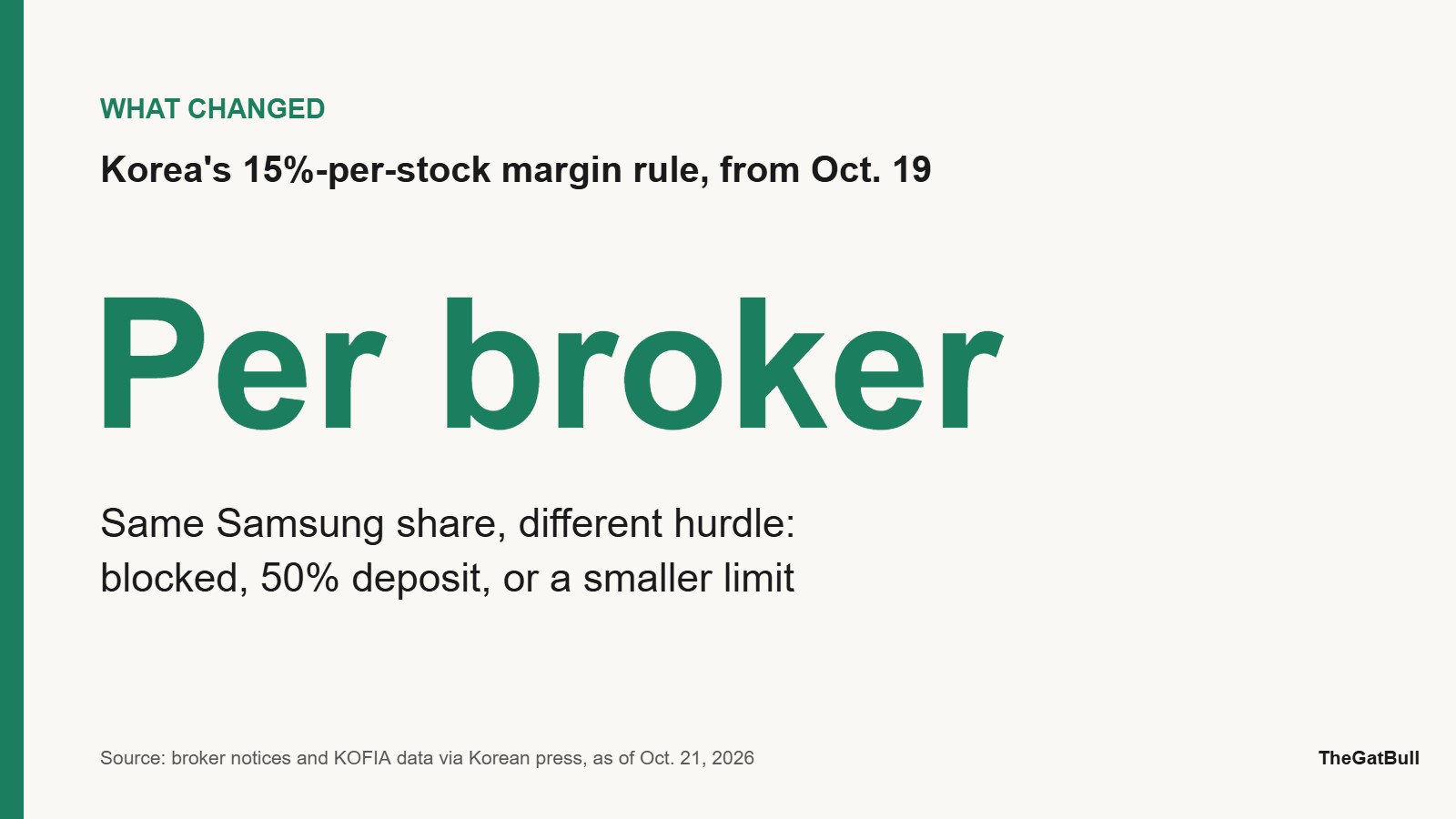
Korea’s 15% per-stock margin rule took effect Oct. 19. Brokers set different hurdles for Samsung and SK hynix as margin debt fell 11% in six sessions.