
This is market analysis, not investment advice.
On August 26, Hyundai Motor’s board voted to cancel 2,505,606 of its own shares — 1,291,274 common and 1,214,332 preferred — reported at about ₩789 billion, roughly $575 million at the September 2 Seoul close of about ₩1,370 per dollar. This is the value-up playbook as written: a company destroys its own stock so that each remaining share is a larger claim on the same business. And then the shares fell two sessions running, down 3.09% on the 26th and 2.45% on the 27th.
The textbook says a cancellation lifts the price. It didn’t. Two separate things are going on, and it is worth keeping them apart from the start. Why the cancellation gave the stock no lift is mechanical, and it comes down to where the shares came from. Why the stock actually fell is a different question, with ordinary answers — expectations and sentiment. This article is mostly about the first, because that is the part a US investor is most likely to get wrong when reading a Korean headline.
For EWY holders, in two lines. (1) Hyundai is about 1.85% of EWY (iShares holdings as of August 6, which predates the August MSCI index review, so the September weight needs rechecking). (2) The cancellation lifts the theoretical per-share value of what EWY already holds, but it is not a new buy order — and sized against the fund it is a rounding error, roughly a hundredth of a percent of EWY by an approximate calculation.
1. What happened — and where the shares came from
Hyundai is retiring 1,291,274 common shares and 1,214,332 preferred shares, 2,505,606 in all. At the August 25 closing prices — ₩421,000 (about $307) for the common and ₩202,500 for the preferred — the arithmetic comes to roughly ₩789.5 billion, while the figure reported across Korean outlets is ₩789.1 billion; we use the reported number. It is one tranche of the three-year, ₩4 trillion (about $2.9 billion) buy-and-cancel program the company laid out in January. The canceled common works out to roughly 0.6% of common shares outstanding, an approximate calculation from a reported share count rather than a company figure.
A word on the preferred shares, since they are nearly half the total. Korean preferred shares are non-voting and carry a dividend preference, and they typically trade well below the common — here ₩202,500 against ₩421,000, a discount of about 52%. Retiring them shrinks the share count without touching voting control.
The point that matters is not the size but the origin. These were shares Hyundai already held in its own treasury, not shares bought in the market for this purpose. Employee-compensation shares approved at March’s annual meeting were excluded. The share count falls, while the company’s registered capital base — the paid-in capital on the balance sheet — is unchanged. One outlet reported a larger cancellation figure together with a separate dividend number; neither is confirmed against the primary filing, so this article does not use them.
2. The phase — a margin squeeze, which is why the funding choice matters
Where a company finds the money for shareholder returns matters more when the money is tight, so the quarter is worth a paragraph. In the second quarter of 2026 Hyundai posted operating profit of ₩2.85 trillion (about $2.08 billion), down 20.8% year on year, for an operating margin of 5.8%. The company attributes ₩1.8 trillion (about $1.3 billion) of first-half cost to US tariffs — the same tariff pressure we looked at from the production-localization angle in August. US sales rose 0.9% to 264,587 units, holding a local share in the 6% range for a fifth straight quarter, while incentives and input costs ate into the margin.
The bright line is hybrids. Hyundai’s US hybrid sales jumped 71% year on year in the second quarter; hybrids reached 26.2% of its US mix and 18.9% of global wholesale, a record. By August, hybrids were 29% of Hyundai’s US volume and electrified models 34%. Toyota, Honda and Hyundai together control about 86% of the US hybrid market, and hybrids hit a record 15.4% share of US sales in the first half, roughly three times pure EVs. Hyundai Motor Group’s overall US share ran 11.8% through April, up a point year on year.
So: a margin squeeze under tariffs, offset by a hybrid franchise that is genuinely winning share. Against that backdrop, funding a return by retiring stock already in hand — rather than spending cash to buy more — is an understandable choice, and it is also the choice that decides what the market feels.
3. The coordinate — which line this actually moves
A cancellation touches the share count, and through it earnings per share. It does not touch revenue, and it does not place a single order in the market. Hyundai retired stock it already owned, so the per-share math improves while no buyer ever shows up on the exchange.
Contrast that with a case we covered in August. SK Hynix’s ₩40 trillion program works the other way round: the company buys shares in the open market first and cancels them afterward. That purchasing is real demand for as long as the window runs. Same English word, opposite mechanics. Samsung’s multi-trillion-won return commitment is a third shape again — a range rather than a fixed number. Is Hyundai’s pattern the Korean norm or the exception? Honestly, two cases do not settle it, and we have not counted the field; that is a question worth tracking rather than answering here.
As for the decline itself, Korean market reports pointed to the overall return package landing below expectations and to cooling enthusiasm around the robotics unit. That is market interpretation rather than primary fact, and it is the ordinary sort of reason a stock falls. It does not compete with the mechanical point — it completes it. The cancellation could not cushion the fall, because a cancellation of treasury stock brings no buying to cushion with.
4. The flows — what the tape did
On August 25 the shares closed at ₩421,000. On the 26th, the day of the board decision, they closed at ₩408,000, down 3.09%. On the 27th they closed at ₩398,000, a further 2.45% lower. How the index moved on those two particular days is not established here, so treat the two sessions as context rather than proof — the argument rests on the mechanics of the cancellation, not on two closing prices. For the day of writing: the KOSPI closed September 3 at 6,579.48, up 0.26%, while the KOSDAQ fell 1.71% to 790.21.
5. Before and after — and what to watch
January 2026: Hyundai announces the ₩4 trillion three-year program, alongside a total shareholder return ratio of 35% or more, a minimum annual dividend of ₩10,000 (about $7.30) and a quarterly dividend of ₩2,500 (about $1.82). Now: the first tranche has landed, executed by canceling stock already sitting in treasury.
What to watch is specific, and there is no published tranche calendar that we can point you to — the filings are the schedule. Watch whether the next tranche is funded by open-market purchases, which would be a flow event, or by more treasury stock, which would be another accounting event. Watch the DART filing for the execution date and the remaining treasury balance. And watch the refreshed iShares weight once the August MSCI review — the semiannual reshuffle that decides which Korean names the index, and therefore EWY, holds — is reflected. Those markers, not a forecast, are what tell you which kind of value-up Hyundai is running.
6. What it means for Korea
A Korean share cancellation, when it erases stock the company already held, brings no new buying with it. Value-up spreading from chips to cars is a real direction — but a direction is not a price. A cancellation can be an accounting and earnings-per-share event; a purchase is a flow event. Both get translated into English as “buyback,” and that is where a US reader’s instinct misfires: in the US the word usually arrives attached to an announced program of open-market purchases, so the buying is assumed. In Seoul the same word often describes the retirement of stock already held, where there is nothing left to buy.
So when that headline appears on a Korean company, the question is simple: did the company buy shares this time, or retire ones it already owned? The first brings demand while it runs; the second improves the books. Hyundai’s was the second.
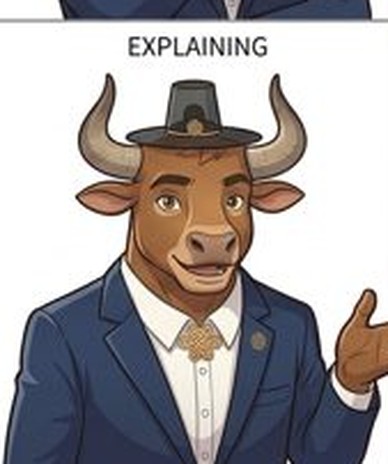
Mr. Gat: “A cancellation and a purchase are not the same trade. Hyundai retired shares it already owned — the math got better, but no new money hit the tape. If you own EWY expecting ‘buyback equals pop,’ read the fine print in Seoul.”
7. Getting the exposure and the US anchor
Three routes from a US account. EWY holds Hyundai at about 1.85% (iShares, August 6), which is the route most US investors actually have. HYMTF is an unsponsored over-the-counter quote of the Korean ordinary shares rather than a sponsored ADR; it trades thinly, with wide spreads and small daily volume. You can also buy the Seoul-listed common directly — Hyundai Motor (KRX: 005380) — through a broker such as Interactive Brokers.
The US anchor: buybacks at GM and Ford are typically announced as open-market purchase programs, so the buying itself is the demand event while the program runs. Not a perfect parallel — US issuers also hold repurchased stock in treasury and retire it later, so a two-step is not uniquely Korean. What differs is which half of the two-step the headline usually describes, and this time Hyundai’s headline described the back half.
The wrap
Hyundai did the thing the value-up era asks companies to do, and the stock still fell. That is not a contradiction once you know the source of the shares. The direction is real; the demand was not attached this time. For an EWY holder, nothing needs doing today — but the next tranche is worth watching, because how Hyundai funds it decides whether this program is a flow story or a share-count story.
FAQ
Does a share cancellation raise the price?
Not necessarily. If it erases treasury stock the company already held, no new demand appears; Hyundai’s shares fell for two sessions after the decision.
How much did Hyundai cancel?
2,505,606 shares — 1,291,274 common and 1,214,332 preferred — reported at about ₩789.1 billion at the August 25 close, one tranche of a ₩4 trillion (about $2.9 billion) program.
Does it matter for EWY holders?
Hyundai is about 1.85% of EWY as of August 6. Per-share value improves in theory, but no new buying is attached, and the effect on the fund is on the order of a hundredth of a percent.
Can I buy Hyundai directly in the US?
Only through the thin unsponsored HYMTF quote or the Korean listing (KRX: 005380). EWY is the practical route for most US investors.
Sources
DART filings 20260826800261, 20260826800246 and 20260902800437; Hankyung; Ajunews; Yonhap, EBN and Future Chosun on the share count and value; Money Today, Asiae and Edaily for the September 3 index closes; Hyundai Motor Group second-quarter 2026 results; CNBC and Korea Times on US hybrid share; iShares EWY fund holdings as of August 6, 2026.
This is market analysis, not investment advice.
 Written by Mr.Gat — TheGatBull
Korean market coverage from a Seoul-metro-based operator with 15 years of personal investing experience, who reads the filings in the original language. Every price on this site is the KRX regular-session close (15:30 Seoul); every figure states whether it came from a primary filing, the press, or our own calculation. Drafts are AI-assisted, then verified against the original Korean documents and edited by a human before publishing.
Found an error? Tell us — corrections get priority. How we work →