
On Tuesday, Korea’s market “rose” in the headline. But only half of it did. The KOSPI, the large-cap index, closed at 6,835.80 (+15.78 / +0.23%); the KOSDAQ, the small- and mid-cap index, closed at 821.25 (−13.04 / −1.56%). The big market rose and the small market fell — the second day running (Monday was +0.46% / −0.49%). And last week (Aug 21→28) it was the exact reverse: KOSPI −1.79%, KOSDAQ +4.55%. So “Korea rose” is true and misleading in the same breath, and which half rose is the whole story for a US holder.
For EWY holders, in two lines: (1) EWY is the large-cap half — about 41% of it is two chipmakers, Samsung Electronics 21.13% and SK Hynix 20.25% (iShares, Aug 6), both KOSPI names. (2) So on a day like Tuesday your fund tracks the side that rose — but that same large-cap semiconductor side is exactly what US chip tariffs are aimed at, which is the risk to keep in view.
1. What happened in Seoul today
KOSPI closed at 6,835.80 (+0.23%) and KOSDAQ at 821.25 (−1.56%); the won settled the 3:30 p.m. session at 1,370.4 per dollar (+1.8 won). Separately, MSCI’s revised August-review index took effect today — the rebalance ran at the August 31 close, and LG Innotek came in while HLB, LG Display, POSCO International, and Samsung Epis Holdings went out (press-cited). Because EWY passively tracks that index, the fund adjusted those names automatically; they are all small tail weights, so your core exposure didn’t move. Individual closes for Samsung and SK Hynix weren’t confirmed in primary sources for September 1, so nothing here is attributed to a single stock — the story is the index split, not one company.
2. Korea is two markets — and they take turns
The KOSPI is large-cap and semiconductor-heavy; the KOSDAQ is small- and mid-cap, tilted to growth and biotech. They diverge often, and the direction rotates. Last week the small caps won: the KOSPI fell −1.79% while the KOSDAQ rose +4.55%. This Monday and Tuesday the large caps won. Leadership flipped inside a single week.
Why the large-cap side matters so much to you: Samsung and SK Hynix aren’t just big — they anchor the global memory market. Samsung held roughly 39% of DRAM and SK Hynix about 26% in the most recent quarter (together close to two-thirds of the world’s DRAM), and SK Hynix leads high-bandwidth memory (HBM — the memory stacked next to AI accelerators) at about 58%. That is the industry phase EWY rides: an AI-driven memory upcycle concentrated in the two stocks you already own.
3. The tariff coordinate — where it would actually hit
The biggest overhang on that large-cap half isn’t Korean policy; it’s a US one. Washington has floated a tariff of up to 100% on imported semiconductors, with an exemption signaled for companies building chip plants inside the United States (press-reported). Trace it to the P&L: a tariff taxes chips as they enter the US, which would pressure revenue and gross margin on US-bound sales for exporters. The exemption is why it matters specifically to these two names — Samsung is building a fab in Taylor, Texas, and SK Hynix is building an advanced-packaging plant in Indiana, so the carve-out could shield exactly the stocks that dominate EWY. Nothing is enacted yet; the point is to know which line on the income statement to watch, not to predict the outcome.
4. What to watch from here
A few dated markers. SK Hynix faces a September 4 deadline to re-file its response to a Korea Exchange disclosure inquiry — that’s the exchange formally asking a company to confirm or deny a market rumor, and the re-filing is the thing to read (to verify). The US Federal Reserve, now chaired by Kevin Warsh, meets September 15–16 and has signaled a wait-and-see stance, while the Bank of Korea has already pre-emptively raised its policy rate to 3.00% (press). And the Korean market closes for the Chuseok holiday from September 24–26. The watch-metric underneath all of it is simple: foreign flows into the large caps, and any hard headline on the chip tariff — those move your 41%, not the KOSDAQ’s swings.
5. What it means for Korea
When you read “Korea rose,” ask whether the part you own rose. EWY is the large-cap half, so its fate is tied to Samsung and SK Hynix far more than to the broad “Korea” of the headline. And here is the uncomfortable symmetry: the large-cap semiconductors that held the index up on Tuesday are the same names sitting in the tariff crosshairs. In EWY, the shield and the target are the same two stocks — which is why a good day and a real risk can share a single line.
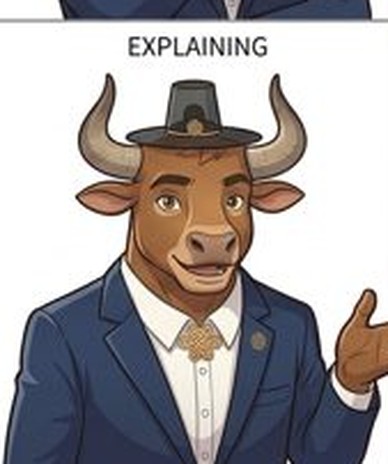
Mr. Gat: “Ask which market rose. Your EWY always stands on the big side — when it’s the shield, and when it’s the target.”
6. Getting the exposure — and should you do anything?
The ladder is short. EWY (NYSE Arca) gives you the entire large-cap half in one ticker. For the crown jewel directly, SK Hynix trades as a US ADR (Nasdaq: SKHY); an ADR can trade at a premium or discount to its Seoul shares depending on demand and the won, so the US price won’t always match the Korean one one-for-one. The KOSDAQ small caps that swung the other way are mostly not buyable from a US brokerage account without a local one. Should you act on a one-day split? No — a single session’s rotation between the two indexes is noise for a long-term holder. The signal worth holding is structural: you own the concentrated, AI-memory large-cap side, with the tariff as its defining risk.
7. The US anchor
It rhymes with the narrow-breadth episodes in the US, when “the S&P rose” but the gain was really a handful of megacaps carrying a flat majority. Not a perfect parallel, though — in Korea, large caps and small caps trade as two separate indexes, so the divergence shows up as an explicit number (KOSPI vs KOSDAQ) instead of hiding inside one blended benchmark. That transparency is useful: it forces the exact question a US index rarely does — which half am I actually holding?
The wrap
Korea didn’t simply rise on Tuesday. The large-cap half rose and the small-cap half fell, for the second day and the mirror image of last week. If you own EWY, you own the half that moved up today — and the half in the tariff line of fire. Same two stocks, both facts.
FAQ
Did Korea’s market go up or down on September 1? Both, depending on which index. The large-cap KOSPI rose +0.23% to 6,835.80; the small-cap KOSDAQ fell −1.56% to 821.25.
Why do KOSPI and KOSDAQ move in opposite directions? They hold different companies — the KOSPI is large-cap and chip-heavy, the KOSDAQ is small/mid-cap growth and biotech — so market leadership rotates between them, sometimes week to week.
Which one does EWY track? The large-cap side. About 41% of EWY is Samsung and SK Hynix, both KOSPI names, so EWY moves with the large-cap half.
What’s the tariff risk in plain terms? A proposed US tariff of up to 100% on imported chips would pressure margins on US-bound sales; a signaled exemption for firms building US plants could shield Samsung and SK Hynix, which are doing exactly that. It isn’t enacted — treat it as a risk to monitor, not a done deal.
What changed with MSCI today? The revised August-review index took effect (rebalanced at the Aug 31 close): LG Innotek in, four small names out. EWY adjusted them automatically; the top two weights were untouched.
Sources
KOSPI/KOSDAQ closes and USD/KRW (Sep 1): asiae, mt.co.kr, edaily. DRAM/HBM market share: hankyung, Counterpoint Research (Q2 2026). MSCI August review: asiae, Seoul Economic Daily, Aju Press. US semiconductor tariffs and US-fab plans: Korea Herald, Korea JoongAng Daily (press-reported).
 Written by Mr.Gat — TheGatBull
Korean market coverage from a Seoul-metro-based operator with 15 years of personal investing experience, who reads the filings in the original language. Every price on this site is the KRX regular-session close (15:30 Seoul); every figure states whether it came from a primary filing, the press, or our own calculation. Drafts are AI-assisted, then verified against the original Korean documents and edited by a human before publishing.
Found an error? Tell us — corrections get priority. How we work →